Showing posts with label science fiction. Show all posts

Sunday, December 30, 2018

Robert Harris' "An Officer And A Spy": Dreyfus affair, a turning point in European history

Robert Harris has a talent for creating a good suspense stories. This book describes in vivid details how Dreyfus Affair unfolded in 1890s in France.

Dreyfus was an young French military officer of Jewish origin from German-occupied Alsace. In 1894 he was arrested and charged with spying for Imperial Germany. He denied any involvement in any conspiracy against French Republic but due to widespread antisemitism then in France he was found guilty anyway.

Robert Harris begins the story with Dreyfus conviction in military court and then slowly and methodically exposes all the inconsistencies and prejudices found in this affair. 

This is a remarkable story and anyone should know about it.    

posted by David 


Saturday, June 23, 2018

Judge Dee's first case by Robert van Gulik

This book about Golden Buddha is part of detective stories whose main character is Judge Dee set in 7th century China. It is said Judge Dee's character is based on real historical Chinese statesman and magistrate. 

In this book Judge Dee is investigating murder of another Judge in a port town. 

Even though it is well written novel, I was not very impressed. Judge Dee is open-minded and curious personality but I did not see anything remarkable in his character to make me to want to read other stories.

posted by David


Sunday, January 14, 2018

Lem's "Solaris" remains true to its concept

I remember reading this famous book when I was teenager but could not recall much of it so I decided to re-read it. 

I got two impressions out of it: 

The first half is quite "scary" especially if you like to read books before going to sleep and it is dark around. 

The second half is incomprehensible. I did not understand it and lost interest. Thankfully it is a short novel so I finished it quickly.

In the end I will say that this novel copies its narrative and remains true to its core idea that people are not equipped [yet] to understand behavior of an alien life form. Unintended side effect of it is that reader will find herself/himself at a loss after reading this book.

posted by David Usharauli
     

Sunday, October 8, 2017

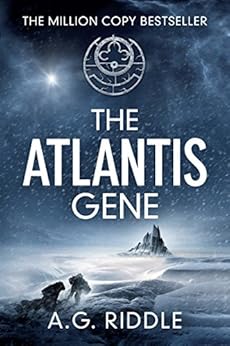
"The Atlantis Gene" by A.G. Riddle is riddled with "holes"- review

This book is by A.G. Riddle is riddled with many unscientific "holes". The plot is totally unrealistic on its face. 

Does the author really believes stem cell injection in individuals with autism spectrum disorder could change their brains as if their brains are missing some neurons that can be replenished by stem cells?

How is it that people from mysterious imari organization managed to transport Altantian Bell to Tibet? Does not book say that Bell eliminates any living being not having Atlantian gene?

How is it that Atlantian spaceship with super advanced technology was caught by tsunami unaware and crushed?

This book is a science-fiction book not a fantasy and such blunders are not acceptable without some explanations in my view.

posted by David


Saturday, July 15, 2017

"The Mote in God's Eye" - review

Initially this book was interesting but later it became too boring. It is too long in my view.

I also think that the novel is unequally developed when it comes to advances in interstellar travel and biology. For example, when ship finds aliens and take their samples, they need to send it back to their planet to do a genetic analysis. It is highly unlikely that humanity could achieve an interstellar travel capacity and at the same time could not develop technology that could sequence alien biological forms on board of their ships.

posted by David


Sunday, June 11, 2017

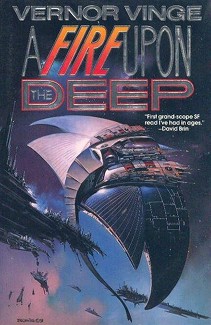
"A Fire Upon The Deep" by Vernon Vinge

I am not sure whether to like this novel or not. I managed to read it fully so most likely I liked it though I skipped many pages filled with "descriptive" writings.

I find Skroderiders to be the most interesting among alien in the novel. I can not even understand what they look like but they were  fun to read. Actually, I did not understand much of the story related to "powers" or "blight" or anything to do with space fighting or anti-blight entity.

So, skroderiders are great, but the rest is too conventional or part of too much fantasy.

posted by David


Saturday, May 6, 2017

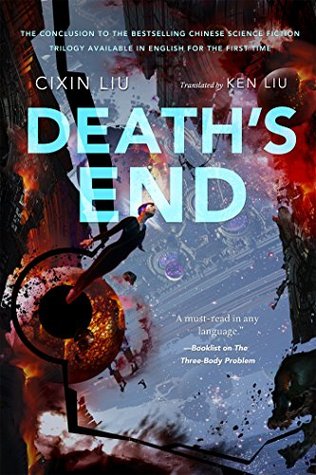
The Three-Body Problem: chapter 3[the end]

This is a final chapter of "The Three-Body Problem" trilogy by Chinese science fiction author Cixin Liu. 

It is a mess. Very disappointing conclusions, ideas and story lines. It became more like a fantasy book rather than serious science fiction. 

First book is great. Second starts slowly but ends interestingly. Third one, starts fine but as it progresses more absurd it becomes.

posted by David

Sunday, December 18, 2016

Rob Reid's Year Zero

I came across this book at the local library. Its synopsis was so outlandish and unique that I decided to read it. Truly enjoyed it, especially first half of the book is one of the funniest part in science fiction category.

I definitely think that this book is ideal for movie adaptation. It has great jokes and moments that would make it great movie to see like "Men in Black"-style.

Though by the end, its narrative becomes a little bit boring and uninteresting, overall is it worth reading and laughing quite a bit alongside.

posted by David

Monday, October 17, 2016

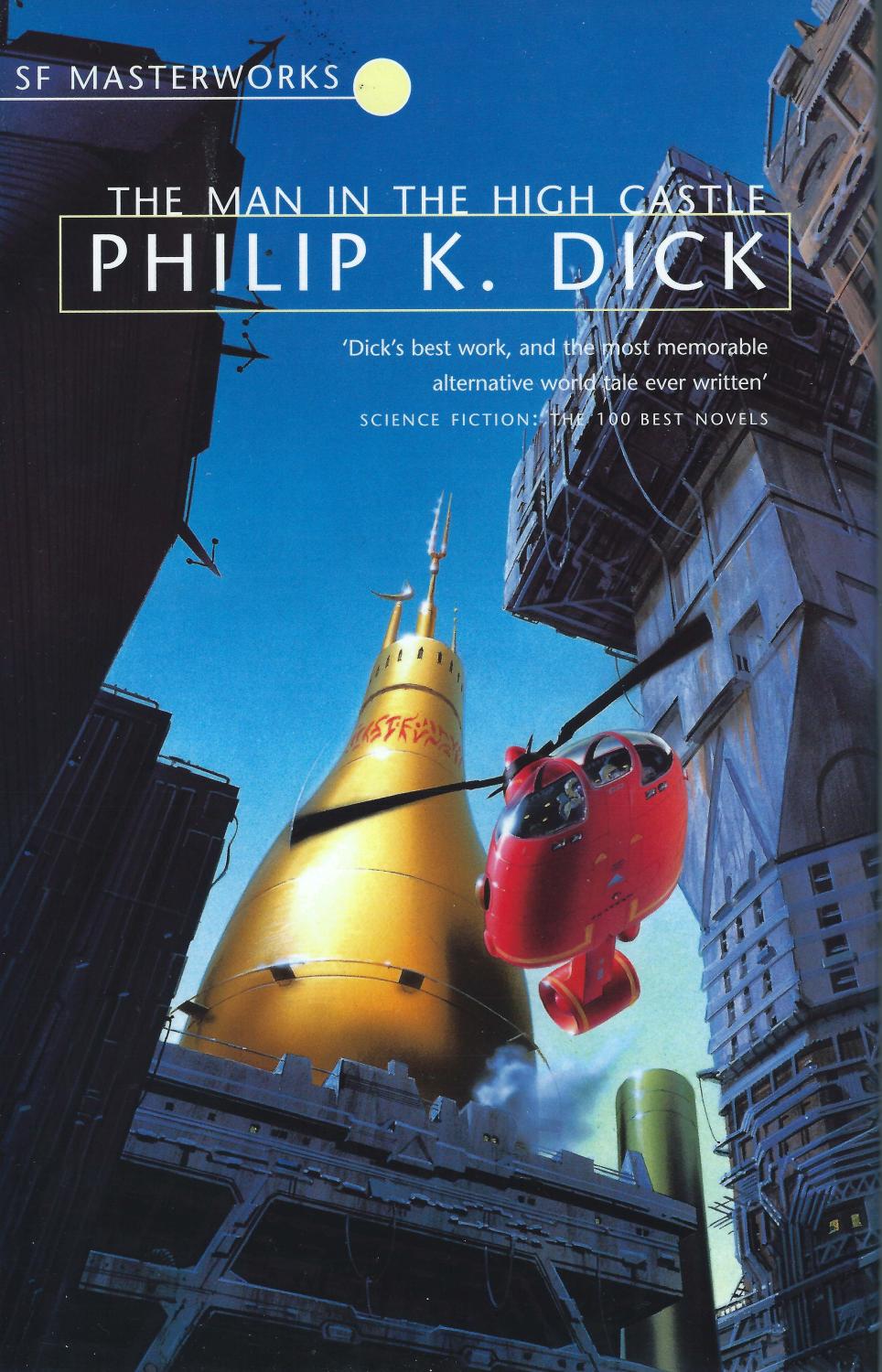
Review of "The Man in the High Castle"


I had high expectations about this novel. I was wrong. It does not really matter if it is considered one of the SF masterworks. I acknowledge that first half is more or less interesting to read but the second half is a total mess.

One reason that I did not like this novel is the author's desire to show, in this alternative world, that the Japanese officials and their occupation Forces as benevolent and having no desire to abuse other conquered nations. In contrast, Germans are depicted as if constantly following a vicious and idiotic policies.

So, I did not understand the author's point to depict Japan and Germany so differently in their attitude towards conquered nations.

posted by David Usharauli 


Friday, October 7, 2016

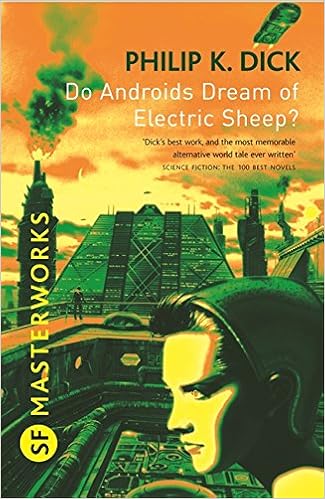
Review of "Do Androids Dream of Electric Sheep?"


This is a classic science fiction novel. In my view, first half of the book is truly fascinating. Especially, when the author presents his vision of a dystopian future where owning and taking care of a real, live animals becomes an ultimate moral goal of remaining humankind.  
 
However, in my opinion, the android story related to nexus-6 prototypes is not well developed. Moreover, second half of the novel is confusing and lacks the coherence.
 
I still recommend reading it since it is quite short book.
 
posted by David  

Thursday, September 29, 2016

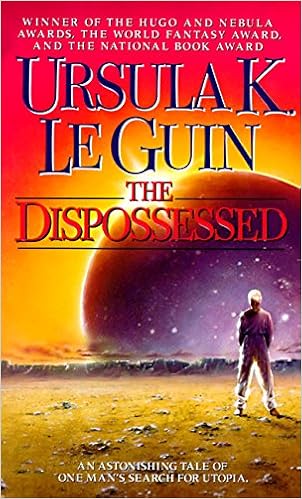
"The dispossessed" and discarded


This is second book I tried to read of Ursula K. L Guin and failed. I can't say that she writes badly. I simply feel that stories could be easily condensed without losing any value. Otherwise it feels if one reads the same ideas over and over.

I managed to read this particular novel through the half and then gave up. It did not satisfy my curiosity to continue reading. 

posted by David     

Thursday, September 22, 2016

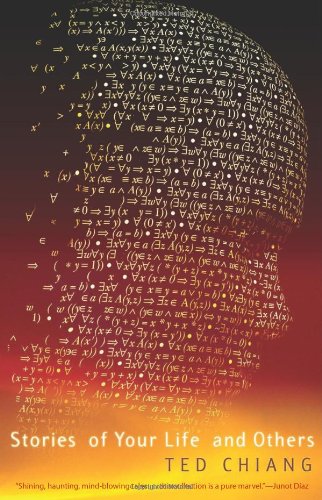
Ted Chiang: science fiction without end

I had no idea who Ted Chiang was until I saw trailer for "Arrival". It appears that this new science fiction movie is based on short novel by this author. 

So, I decided to have a look at the actual novel to see how closely it will match to what's is going in the movie. I ended up with this book that contains both "Arrival" (whose actual book title is "stories of you life") novel and others.

I was initially impressed by author's unique intellectual approach to science fiction. His writing style is excellent. However, most of the short novels ended abruptly leaving me a little bit confused. It feels if when the author's imagination reaches its limit he stops his novels.

My personal favorite short novel was about "lookism". It was, I think, only short story that naturally developed from A to Z.

posted by David Usharauli   

Sunday, August 21, 2016

Review of "The Stars My Destination" by Alfred Bester

This was second book I read from this Author and I think it is plenty for now. First book, "the demolished man" was quite good. This second book is pretty bad. 

It some some general similarity with "the demolished man". It is fast paced, it opens with the mystery and keeps the reader curious but it ends unremarkably.

I would not recommend this.

posted by David  

Thursday, August 11, 2016

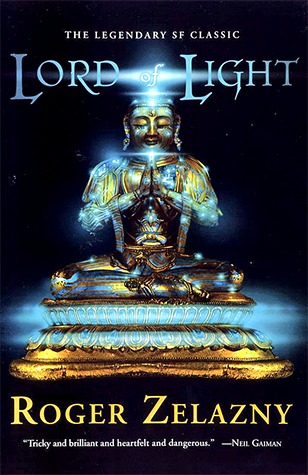
Zelazny's "Lord of Light": from avatars to playing "Gods"

First why I read this book. I was intrigued by its concept. Aliens or future humans had conquered some unknown habitable planet and are masquerading themselves as Gods from Indian Pantheon.    

What was interesting is that these "Gods" were preventing indigenous people from industrialization in order to keep control. Then comes along a member of these supreme "Gods", known among other names, as Buddha, who decides that indigenous people deserve to have free choice in their destiny.

So, basically the whole novel is about how beings (avatars of Buddha, Trimurti, local "demons") with supernatural powers fight with each other.

However, while the concept was interesting and seemed as an attempt of sci-fi translation of known sectarian fights for domination taken from history (Hinduism, Buddhism, Christianity), the novel did not provide anything valuable besides revealing and describing those heavenly "fights". It felt as if reading meaningless stories.

posted by David Usharauli     

Sunday, July 24, 2016

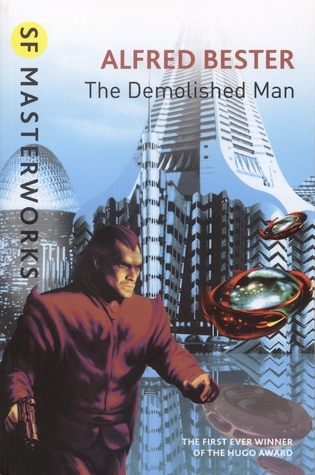
Psychological trauma in "The Demolished Man" by Alfred Bester

This is a short but quite dramatic book. I liked it. It is fast paced novel and it is finished before it becomes boring. 

Set in 24th century it depicts society where some people are selected for their ability for extrasensory perception (basically mind reading). These people are called Espers.

In this society no premeditated capital crime has been recorded for 70 years due to fact that "planning" stages of the crime are easily "peeped" by Espers and prevented.

So, the book is about a rich and powerful, but mentally disturbed person who decides to murder his rival business cartel head.

Story develops quite rapidly and its plot resolution is quite different from what one would expect, one might even say slightly anticlimactic or even confusing.

Still I would recommend it for its shortness and fast pace.

posted by David Usharauli
  

Wednesday, July 20, 2016

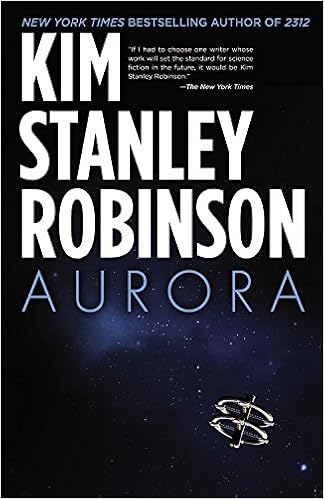
Hello "Aurora" and goodbye "Aurora"

I hardly recall any sci-fi books I read that starts so good and finishes so unremarkable. But this is exactly how I felt when reading Kim Stanley Robinson's "Aurora".

Now I can understand why this novel had 3.7 rating in Goodreads (in my view less than 4 usually indicates really low quality, though even some with 4.25 rating can be really unremarkable).

Even name "Aurora" is kind of misleading because very few pages are dedicated to Aurora itself (Earth-size moon in Tau Ceti).

Most of the book is about how to get from Tau Ceti back to Earth. So many things make no sense, the most obvious one a "failure" to check Aurora for any biological activity. Wouldn't this be a number one priority when landing on a new planet?

What about medical progress in 26th century? The author imagines that by that time people are using 3D printers to print almost anything, including printers themselves, and re-create weather patterns found on Earth, but for some reason in medicine we are still cannot "cure" cancers?

What about people who were left in Tau Ceti to build the new settlement? They simply disappear from the novel, even though whether they have managed to survive for next 180 years (the time it took for a ship to come back to Earth) it would have been most relevant part of the story?

In sum, more asynchronous novel  is hard to find.

posted by David Usharauli          


Thursday, July 14, 2016

"Ancillary Mercy" is about AI and surely it feels as if written by AI

Finally finished Ann Leckie's "Ancillary Mercy". One could rarely find worse writing than this one. These series is about artificial intelligence, AI ships, in a far away galaxy, and curiously enough, except the first volume, both 2nd volume and this 3rd one truly feel as if written by today's AI machine.    


It is obvious without novel ideas Ann Leckie's writing lacks quality. I admit that first volume in these series was quite good, mainly due to fact that it was there when we were introduced to some new ideas and new world, but once ideas were exhausted it became absolutely unintelligent rubbish.

I can't believe that both 2nd and 3rd volumes of these series has been nominated for Hugo awards (1st actually won it). This is too much. Neither volume have any redeeming quality to justify their inclusion in such award.

posted by David Usharauli


Friday, July 8, 2016

Cool and not cool stuff in "Rainbows End" by Vernor Vinge

I think this sci-fi novel was a winner of Hugo award in 2007. Guess what? It was a big disappointment. This is why people don't trust reviews and nominations anymore. I forced myself to read though half the novel and I can't imagine how anyone could nominate it for any award.

Set in the near future this novel depicts what now we may call Internet-of-thing world where people are constantly connected to Internet with google glass-type wearable devices and communicate with each other using silent messages <sm> </sm>.

These ideas sound cool but the plot and people involved in are totally non-cool. Writing style is unnecessary difficult as well.

In summary, this is a situation when cool concept is transformed into an unreadable book due to poor plot and character development with occasional total nonsense and "what is this guy is doing here" stuff.

posted by David Usharauli   

Tuesday, May 3, 2016

John Scalzi's "Fuzzy Nation"

I enjoyed reading this short science fiction novel. It was funny too that is quite rare.

The novel is about exploration and exploitation (E&E) of alien planet Zara 23 by a big [evil] Corporation. One of the contractor, who is a decent guy but has a little bit non-scrupulous nature, comes across sentient and sapient "animals". 

Galactic rules dictates that once sentient species are discovered whole of E&E operation on the planet should stop. As it happens both corporation and this particular contractor would greatly benefit financially by continuing E&E on the planet.

In the end, "good" nature wins over greed and contractor with the help of few friends and sapient "animals" called "fuzzies" defeats Corporation and independent fuzzy nation is established on Zara 23.     

posted by David 


Friday, April 29, 2016

Review note: don't read "Venus Plus X" by Theodore Sturgeon


Review note for this book: don't read it.

David