Showing posts with label non-fictions. Show all posts

Thursday, August 13, 2020

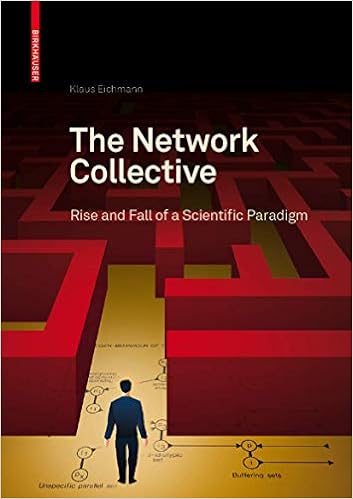
The network collective rise and fall of a scientific paradigm: from theory to absurdity

This is a very interesting book overall. It is written by Klaus Eichmann, a German Immunologist who spent half of his scientific career working on experiments addressing Network Theory proposed by Niels Jerne in the 1970s.

Network theory dominated immunology for 15 years. Hundreds of immunologists were working on it. But by the early 1990s, it disappeared from publications as if it never existed.

What drove the author to write this book was his desire to understand why so many scientists, including himself, suddenly decided to work on a new model, generated tons of data in support of it, and then again suddenly abandoned it.

He divides this book into 3 parts. The first part is focused on the analysis of how science is done. The second part is about Network theory itself, its development, its rise and fall, and the third part is his conversations with fellow scientists of his generation who has done some work on Network theory.

The main point is that Network theory was a mere concept that never developed into a coherent model that could explain mechanistically the immune system and still a big part of immunology society was directly or indirectly involved in perpetuating its validity for 15 years. How was it possible for so many scientists to produce so much data in support of a model that no one could work out from A to Z even at the theoretical level? What was it? Scientific fraud? Poor experimentation? Conformism among scientists? lack of necessary reagents as many scientists appear to suggest?

posted by David Usharauli


Sunday, March 17, 2019

What actually happened in Munich in 1938?

This is a great novel. Its 1938 and everyone in Europe is scared that another war is coming. How to stop it?

It looks like no one in Europe wants or are ready for war except Nazis. WWI was such a shock to people in West Europe that they are willing to go to great length to "appease' Nazis as much as they can rather than to take a risk for another WW. 

But was it really an appeasement what transpired in Munich in 1938? Harris tries to show in vivid details that it is not what actually happened. It is true that Munich did not solve the problem of Nazi expansion in Europe but it gave 1 extra year that was essential to prepare the countries to fight Nazi in WWII. It is possible that 1 year saved humankind and led to defeat of Nazi Germany in WWII.

posted by David       

Sunday, February 17, 2019

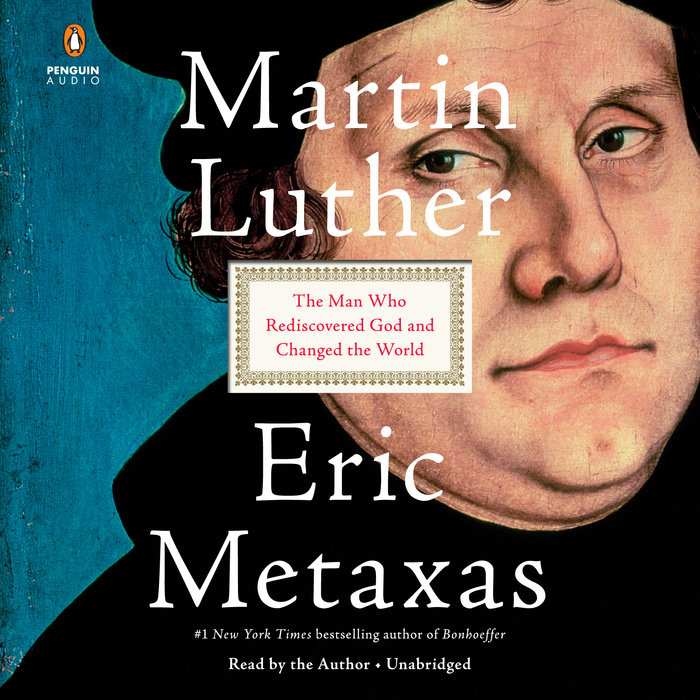
"Martin Luther" by Eric Metaxas -- Reformation: Why in Germany and why Martin Luther?

This is a biography of Martin Luther, a monk in 16th century Germanic state of Saxony whose ideas about Bible started a religious reformation of catholic church. 

This is a story about a private person and his ideas and how he evolved to think that way. 

The book is too big with some unnecessary repetitive information. It is fine to read it if book is available in a local library. It has lots of interesting stuff about Luther himself. Even picture we now recognize as Luther is very different from young Luther people saw when reformation started in 1517. But ultimately I think the author failed to truly explain a political and economical background that prompted  Luther to do what he did. 

The most important question is why reformation started in Germany. Why not in France or Italy or Spain?  Luther himself said it briefly in one of the notes in the book it is because the power the Pope had over Germanic states was more widespread and chance of abuse higher than it was in other parts of Europe. By 16th century Spain, France were already consolidated their statehood and interference in their internal affairs by the Pope was minimal. But Germany was different. It consisted of small principalities and the Pope were able to easily get involved in their internal affairs. Luther's religious reformation was in fact a political turning point in western Europe.

posted by David Usharauli  
Sunday, November 27, 2016

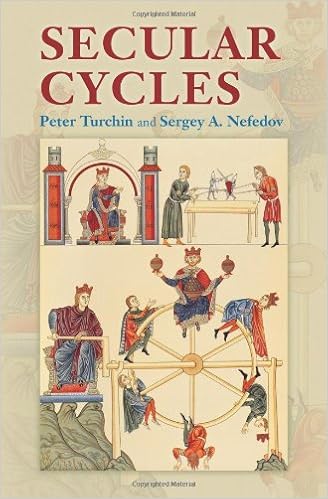
Rise and Fall of the States: Secular Cycles

In this book the authors analyze several correlations that lead to rise and fall of the States based on population growth, labor market demands and excesses of upper classes.

I did not find their approach particularly innovative. One thing I remembered from this book is "plateau" stage they called stagflation. This is a stage in state's secular development when population saturation leads to wage decline that coincides with maximum profits for upper classes.

I would say that USA has entered stagflation phase in the beginning of 21st century. Based on the authors evaluations of several historical Empire States that went through secular cycles, it appears that stagflation phase could persist for decades, even for centuries. Though it inevitably leads to a crisis and fall, followed by renewed cycle.   
posted by David


Wednesday, November 16, 2016

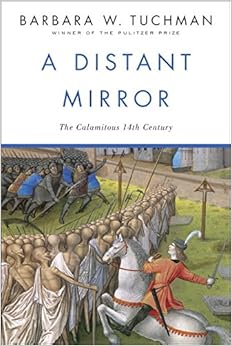
A Distant Mirror: The Calamitous 14th Century

This book an excellent overview of Western Europe during 14th century, though more accurately, it is a history of France as it existed in 14th century.

14th century in France is remembered mostly for 100 Years War fought between France and England and black death, a deadliest pandemic in human history that reduced total human population by 1/3. 

This book is mostly focused on relationships between nobles and Kings and portions are devoted to Church matters and peasant revolts.

It is interesting and easy to read, though I would say it is a little bit boring in the end. 

posted by David


Sunday, October 23, 2016

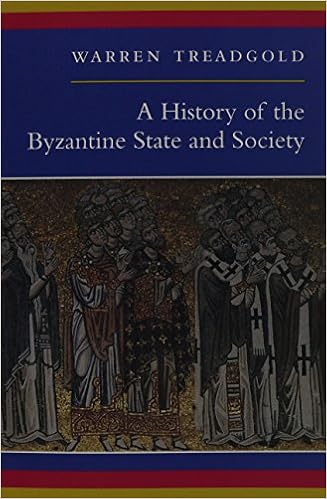
1000 years of Byzantine Empire


This is a huge book but in my view for non-professionals who are interested to know more about Byzantine Empire it is a very good and complete intro.

It covers both its political history and to some degree its social aspects, especially its religious history. In fact, it is hard to find any other country where the nuanced religious questions mattered so much for the society as they did in Byzantium.

While Byzantium as a state disappeared in 15th century, the question remains which country "inherited" its ideas? Greece, Turkey or Russia, other?

It is interesting to note here that Turkish Ottoman Empire covered almost exactly the same territory as the Byzantium did at its height.

posted by David  


Friday, October 7, 2016

Review of "428 AD: An Ordinary Year at the End of the Roman Empire"


I liked this book. In this interesting albeit short book the author presents a very vivid picture of the Roman World that is about to fall, though no one is aware of it yet.
 
It appears that the author is working on new book about ancient Armenian Kingdom and in my opinion that book will be something to look for. His excellent writing prose guarantees that new book would not disappoint.
 
posted by David


Saturday, September 24, 2016

Byzantium and rise of western bureaucracy

This book evaluates transition of early Roman system of government to later Roman (Byzantium)-style of governance dominated by member of civil services, bureaucrats. 

Based on historical evidence the author reconstructs how Empire's every day administrative function were carried out.

I was surprised to learn that later Roman Empire had civil service so complex and so regulated that it could match its version in many today's advanced countries.  

At first, I really enjoyed the author's excellent writing style and wealth of new information in the first few chapters. However, later book becomes quite boring with repetitive information.

posted by David


Tuesday, September 13, 2016

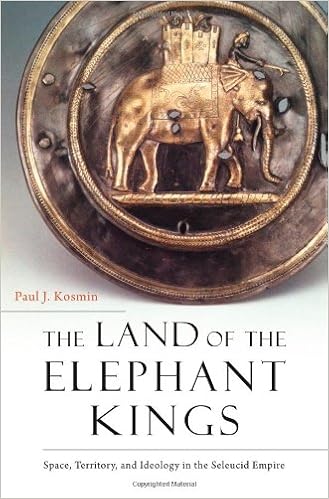
Seleucid Empire: empire without trace

Seleucid Empire existed for more than 200 years inheriting the largest part of Asian territories conquered by Alexander the Great during his Asian campaign. 

Its history is not well known. It was founded by one of the Alexander's general, Seleucus, around 312/311 B.C. This alien Macedonian (seleucid) dynasty ruled people of middle east who were before ruled by Achaemenids of Ancient Persia.

For me the most intriguing question of post-Alexander's age is how it was possible that people of Middle East accepted foreign rule without much resistance.

However, this book did not even discuss it as if the answer was obvious one. Not really. Moreover, book content is organized quite unusual way making it difficult to follow and derive any valuable information, if any. It really bothers me when I see that book has an interesting title but content is totally useless and hard to digest. I can not recommend this book to anyone. 

posted by David      

Sunday, August 21, 2016

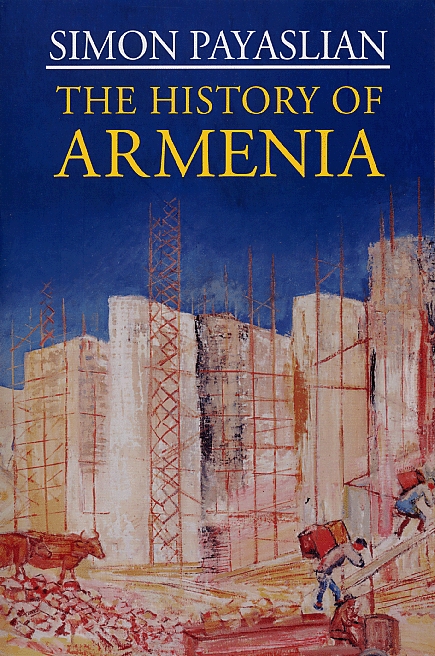
Review of "History of Armenia" by Simon Payaslian

Most people are familiar with the history of their own nation. Frequently this knowledge is acquired in schools during formal education. However, school textbooks rarely provide the full picture and usually they can be quite one directional.    

Armenian nation is one of the oldest nation in the south Caucasus/middle east. I was curious to read their history as written by Armenians.

I found this book very unsatisfying. I felt that it is written in a haphazard way, jumping back and forth chronologically. It specifically focused on Armenia's relationship to great geopolitical powers such as Persia, Byzantine and almost totally ignores its historical relationships with other Caucasian nations. For example, when talking about Armenia between 5th century BC and 20th century AD, the author only twice mentioned Armenia's neighboring nation of Georgia. Now this cannot be historically accurate situation.

I was especially interested to learn about Armenian Bagratuni Royal family and its connection to Georgian Bagrationi Royal family. However, the author is totally silent about it. So, for me  it appears that this book is written specifically for Armenian diaspora who lives outside Armenia proper and who might be interested in big picture rather than in accurate details.   

posted by David Usharauli  

Sunday, August 14, 2016

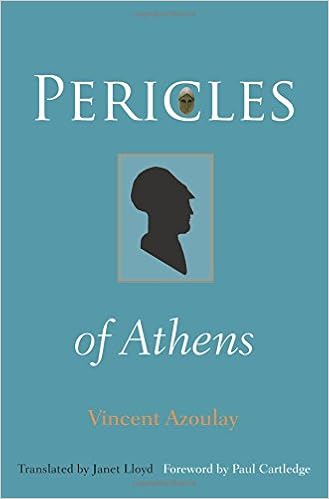
"Pericles of Athens" by Vincent Azoulay

This is very interesting historical analysis about Pericles. I came to know about Pericles after reading historical fiction series by Gary Corby. In Athenian mystery series Gary Corby provided picture of Pericles as a great Athenian statesman (that he was indeed).   

So, I decided to further read about this real life historical figure who led Athenian maritime empire for 25 years. 

Initially I thought it will be organized chronologically and based on Pericles biography, but in fact it was organized by topics that the authors thought were relevant to understand 5th century BC Athens and Pericles role in city's life.

Over centuries since fall of ancient Greek civilization educated establishment in the West took mutually exclusive view of Pericles. Until 19th century, most writings dedicated to ancient Greek considered Pericles in negative light due to Athens legacy in Peloponnesian war that ended in its defeat by Sparta and its allies. Many blamed Pericles for initiating this great war and leaving Athens unprepared.

However, opposite view shared by the author of this book suggests that Pericles was not in a position to single handedly decide the fate of Athens but rather he was a great statesman that skillfully operated within the framework of Athenian democracy. The fact that Athens ultimately lost the war to Sparta indicates that Athenian democracy as it is existed in 5th century BC simply had not developed sufficient check and balances that ensures that state properly directs its resources independently who is nominal head of the state.

posted David Usharauli


Sunday, June 19, 2016

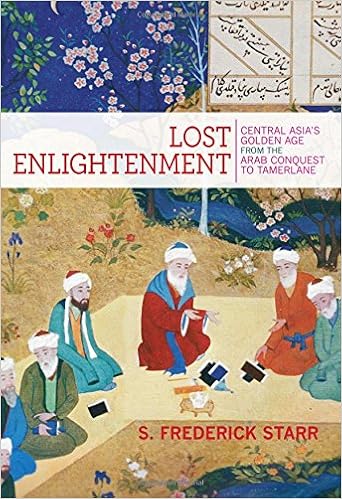
Lost Enlightenment: Central Asia's Golden Age from the Arab Conquest to Tamerlane

A few centuries prior to dawn of renaissance in western Europe, one part of the old world, central Asia, experienced an intellectual awakening unparalleled in breadth in that region till these days.  

Almost all of those intellectuals from central Asia and that period is called "Arabs" and "Arab renaissance", respectively, due to the fact that their works and frequently their names too were [in] Arabic.
 
Why "Arabs"? Because starting from the middle of 7th century AD (or CE) people from Arab peninsula began a successful proselytizing conquest that within next hundred years covered territories from Spain to India and China. Central Asians became a literally central players in Arab history and its renaissance.
 
It is hard to imagine that 1000 years ago when most of Europe was living in the "dark ages", people living in today's Afghanistan, for example, were producing scientists and writers who excelled in mathematics, astronomy, medicine and literature.
 
Names such as Al-Farabi, Ibn Sina, Al-RaziOmar Khayyam, Al-Biruni, FerdowsiAl-Khwārizmī (and many, many more), all came from central Asia and Iran. 
 
In this book, S. Frederick Starr provides a concise history of these "Arabs" and the world inhabited by them.   
 
posted by David Usharauli
Friday, June 3, 2016

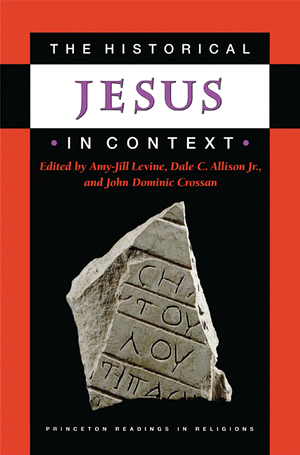
The Historical Jesus in Context

This is another book about Jesus and early Christianity that was available to read. Previously I read few books about this subject and still I felt that I needed more to better understand the topic. 

One reason I decided to read this particular book was the fact that I thought it would have "explanations" and "interpretations" of the numerous archaeological and historical facts about 1st century Jewish state and environment where Jesus grew up.

In fact 1st chapter of the book where one of the authors summarizes the whole topic is truly excellent and I was very excited to continue reading.

However, after first chapter, the rest of the book was a total disappointment. Basically, other chapters are about translations of newly found ancient texts that could have influenced Jewish people thinking about world or religion in 1st century AD. 

These chapters contained none or very limited "interpretations", so their value was lost to someone like myself.

posted by David


Thursday, May 19, 2016

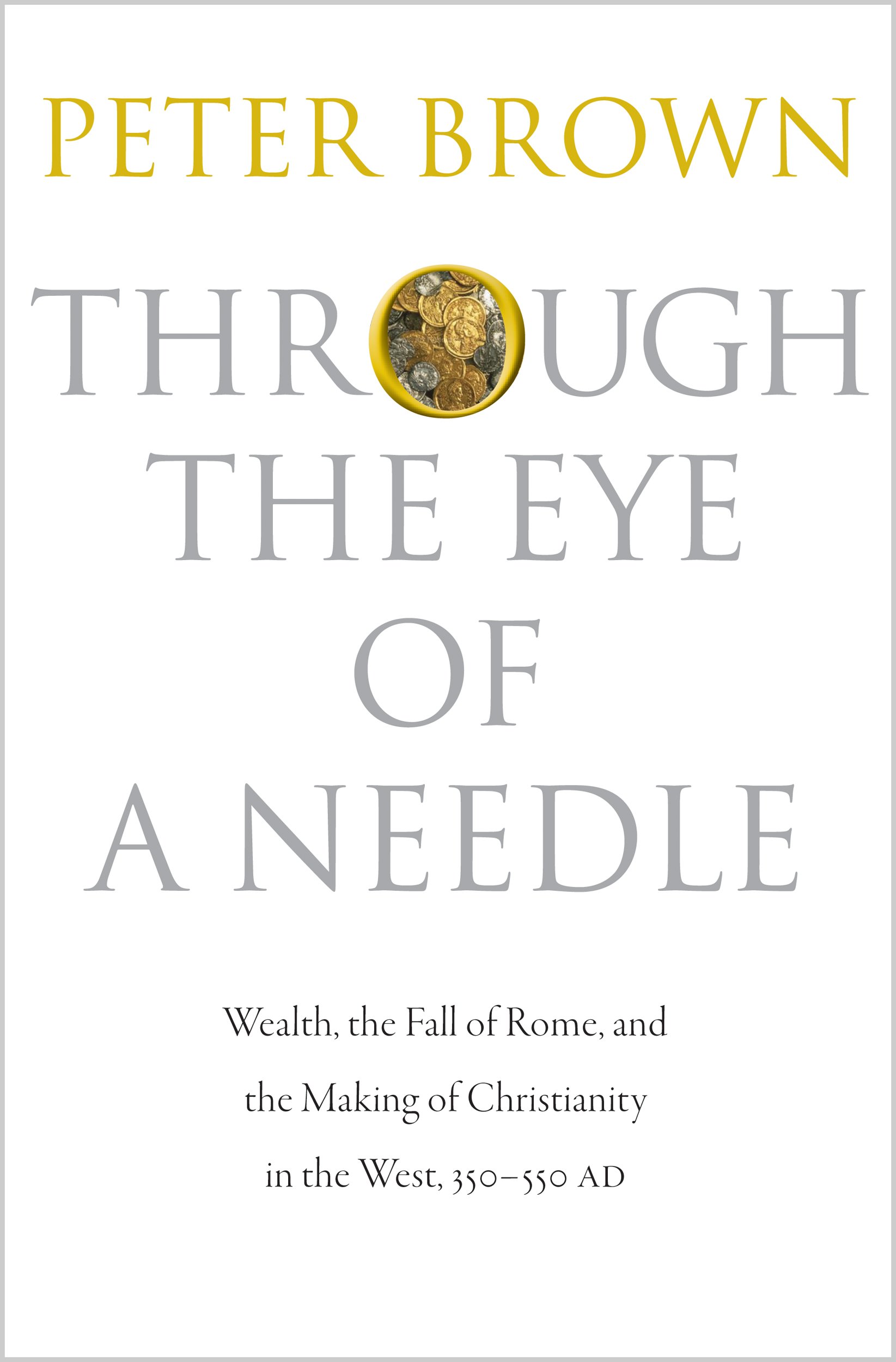
Christianity 350-550 AD

The followers of Christ in the 1st century AD were members of a sect that originated in Galilee. There were many such sects within Roman Empire, some more famous, some less. But, for some reason only Christianity became a dominant religion in the Roman world by middle of 4th century.    

How this happened? I thought this book would provide some explanation about this subject. Not really. In general it is not even clear what this book is about. It jumps from one topic to another. It does discuss how wealthy Romans started to accept Christianity and transferring their wealth to the Church. But after reading almost third of this really large book I have no idea why the authors needed so many pages to tell us that.

This book was disappointment for me.

posted by David

Saturday, February 13, 2016

My review of Anna Kuchment's book "The Forgotten Cure: The Past and Future of Phage Therapy"

This is a science/biotech book everyone should read. It reminded me books I read when I was in school about science discoveries, Columbus, Cook, Laperouse voyages to new World, discovery of photosynthesis.      

Anna Kuchment did a superb job by putting together a succinct story about bacteriophages. This is a personal story about scientists who contributed to the discovery of bacteriophages, story of scientists who strongly believed in medical significance of this tiny viruses, who defended and kept alive science and practical applications behind phages, even though frequently it seemed if the whole world was against them. 

Phages are tiny viruses which target bacteria. Phages are everywhere, including our bodies. Each phage is specific for certain bacteria only. Such selectivity of phages positioned them as a very important alternative to antibiotics. Moreover, in many occasions, phages show superior anti-bacterial activity in hard to treat bacterial infections in human, including against antibiotic-resistant bacterial strains. And on the top of that, phage therapy is almost without any side-effects whatsoever. It is quite mind boggling that FDA did not find yet a courage to approve phages for human therapy (it is approved as a food "sterilization" method). But therapeutic application of phages will come too. We can't continue ignoring this vast resource of mostly "friendly" viruses.

posted by David Usharauli
             

Tuesday, February 9, 2016

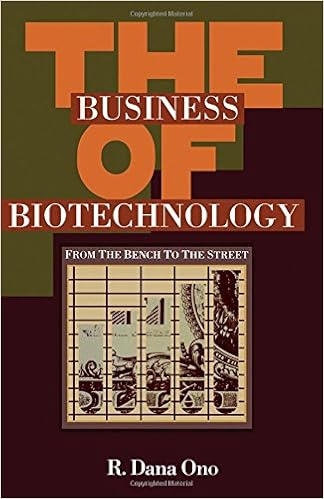
1991: Business of Biotechnology: From the Bench to the Street


It was quite interesting experience reading book about biotechnology written in 1991. First chapter, by Robert Teitelman, was actually very good. However, later chapters failed to deliver anything interesting or memorable. After reading several books in this category I am convinced that only books that contain real world story or personal accounts provide any value. Still, people are putting all kind of generic information that is dry and uninteresting. This particular book has 1 or 2 stories that resonated with me but the rest of it was poorly written and dull. 

posted by David Usharauli
Wednesday, February 3, 2016

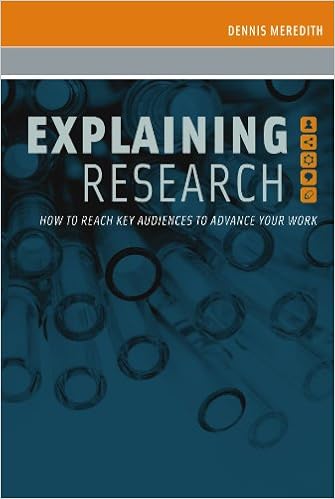
My review of Dennis Meredith's "Explaining Research: How to Reach Key Audiences to Advance Your Work"

Few weeks back I was browsing through journal Nature and came across a short review of newly published book that is about science communication. There, the reviewer concluded that while that new book was of decent quality, it was not as solid as other books, mentioning as an example book by Dennis Meredith's "Explaining Research: How to Reach Key Audiences to Advance Your Work"    
I am interested in science communications. For me, science communication means the following: a scientist reads interesting paper in professional journal. He/she can understand that the results described in paper can have important implications in medicine (for example). He/she digests this paper and communicates it to public in such a way that lay-person reading it can more or less understand it (mostly via blogging). I also believe that if paper has some major shortcomings that could undermine its conclusions, it must be noted in this public "communication". 

So, I thought I may benefit by reading this more "solid" book according to that reviewer. I thought I might learn how to improve my written language and communication style to attract larger audience. 

But this book provided none of the useful tips that could have improved my science blogging experience. Actually, this book by Dennis Meredith is primarily for people who want to work as a public information officer for any public or private organization. Basically it is book for agency public relation bureaucrat. It is filled with common "wisdoms", mostly how to avoid mistakes when communicating for the agency/Institution. Not what I expected based on its title.

posted by David Usharauli       

Monday, October 26, 2015

Biotech valuation


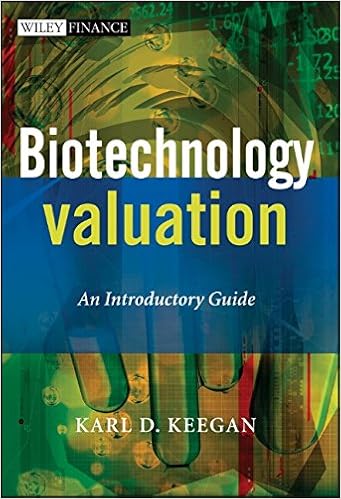
I tried to read these two books to introduce myself to biotech valuation. I had no clear idea what actually "valuation" meant. I wanted to learn a little bit about biotech investment strategies and how to appraise a company's financial "worthiness".  

I thought these books would be easy to understand for the beginners who are not familiar with professional assessment of biotech stocks [I thought books were about it]. However I was mistaken. Book is filled with all kind of graphs and mathematical equations or formulas that had nothing to do with investment and were more advance than my math skills could handle.


Beyond numbers, however, books contained little useful information for me. I thought I would learn, for example, why a particular biotech pipeline is valued so and so. Real life examples. I found none of these. What a waste of time.

posted by David Usharauli


Tuesday, October 6, 2015

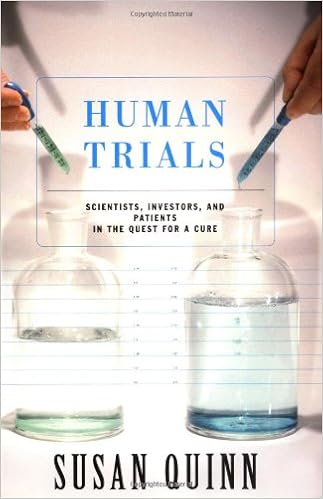
"Human trials" in oral [antigen] tolerance by Susan Quinn

I was trying to get hold of this book for some time and in the end I found it at Open Library. I was interested to read it once I realized that it described a biotech company, then called Autoimmune Inc.,[now no longer existing], that have tried an "oral tolerance" approach to treat autoimmune diseases such as multiple sclerosis (MS) and rheumatoid arthritis (RA).   

Now, this book was published in 2001. By that time, Autoimmune had conducted two major trials, one in MS, and another in RA, and both of these phase III trials failed. As book described, the main reason for those "failures" was unusually high placebo effect.

Book itself is an interview-observation type of work. It focus is people involved in oral tolerance trials. Its main character is Howard Weiner, a neurologist at Harvard Medical School, whose lab provided the scientific basis for oral tolerance trials. 

Oral tolerance is a classical immunological phenomenon. Basically, it postulates that orally taken antigens induce special type of immune response that can cross-inhibit inflammatory immune response. So, the idea was that if patient with autoimmune disease takes target [MS or RA] antigens by oral route, then these antigens will induce special population of T cells which in turn would inhibit disease causing inflammatory T cells.

Today we know that there are several types of regulatory T cells (such as Foxp3+ T cells, IL-10+ or TGFβ1+ Tr1 cells) that can be induced by oral antigens. However, even today, after 15 years, we still have no clear understanding of exact mechanisms responsible for oral tolerance effect.

The story in this book is a prime example of difference between [bio]chemical and purely biological [drug] approaches. Biological approaches, such as oral tolerance, adoptive T cell therapies, are more complex because they involve live cells whose functionalities are not completely understood and they still store lots of unexpected surprises.

posted by David Usharauli
  

Saturday, September 26, 2015

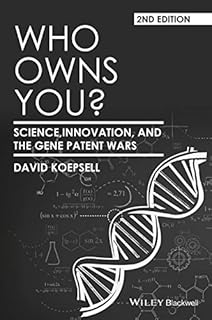
Review of "Science, innovation, and the gene patent wars" by David Koepsell

There is a phrase "not to judge book by its cover". However, here for this book its meaning is completely reversed. I am sorry to admit but this is one of the most useless book I came across, though it has quite cool cover. 

I am really interested to learn more about some of the legal reasoning behind the biggest patent law cases of the past few years that basically transform the landscape for biotech patenting.

Filled with numerous repetitive statements the book fails to even deliver the promise of its title. Only relatively useful part of the book is related to the actual description of Myriad case.

But the author never explained why even assuming in arguendo that third party, for example, some Bay area biotech company has a patent on blue eye gene, it somehow make them to own or control your blue eye gene?

The author has put in the title big words such as "science" or "innovation", but somehow failed to mention anything about them (except some 9th grade level intro about DNA organization).

I was expected that the author would explain why Chakrabarty decision had ballooned into gold rush for patenting naturally occurring genes. It seems that Myriad case wasn't a new decision but rather it re-established the original meaning of Chakrabarty decision written some 30 years earlier.

In addition, the author does not discuss the outlook for biotech patenting in the wake of Myriad case. For example, can one patent any naturally occurring, but newly discovered molecule with anti-viral or anti-microbial properties? Current patent law cases suggest that the answer is negative for this question. You have already guessed obviously that this book does not say anything about it.

posted by David Usharauli