Showing posts with label dystopian future. Show all posts

Friday, October 7, 2016

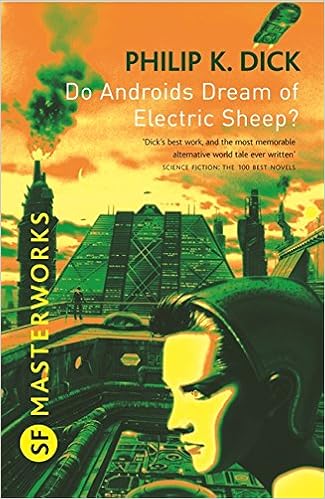
Review of "Do Androids Dream of Electric Sheep?"


This is a classic science fiction novel. In my view, first half of the book is truly fascinating. Especially, when the author presents his vision of a dystopian future where owning and taking care of a real, live animals becomes an ultimate moral goal of remaining humankind.  
 
However, in my opinion, the android story related to nexus-6 prototypes is not well developed. Moreover, second half of the novel is confusing and lacks the coherence.
 
I still recommend reading it since it is quite short book.
 
posted by David  

Sunday, November 29, 2015

Biotech apocalypse in "The Year of the Flood" by Margaret Atwood

I had a hard time digesting this sci-fi, dystopian novel by Margaret Atwood. This novel "The Year of the Flood" is a second novel in the MaddAddam series.   

It is set in near future where there is a new world order "controlled" by private mega corporations with its own army and police forces and research institutions. It is very ugly future. Now it is not clear why and how civilization, especially in the USA, descended into this wild-west type police state. Readers are told that there was some kind of natural or man-made environmental degradation in the south and basically USA is split into several corporate-run states.

The novel has multiple narrators who are recounting for readers events they have witnessed. Each narrator's story completes gaps in other narrator's story, so reader has whole view of what happened or is going on.  

Novel is centered on pacifist group led by person named Adam one. Members of this group practiced vegetarianism and believed that every species has the same rights as humans to exist and flourish on this earth. 

They also believed that world is near to "waterless flood" when Nature would turn against humanity for their callous and inhuman relationship with other earthly species. In the end, "waterless flood" indeed comes as a kind of biotech-engineered pandemic.

This is a very complex novel. Atwood "forces" readers to accept a human civilization where evil prevails and dominates, at least temporarily. It is hard pill to swallow.

posted by David Usharauli 


Saturday, August 22, 2015

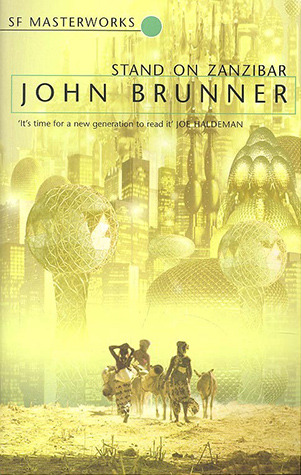
"Stand On Zanzibar" by John Brunner

Now this book may be a science fiction but Zanzibar is a real place and probably more interesting than this book.

I decided to read this book because its reviews were literally glowing. Guess what? I hardly managed to read its first fifty pages.

I would admit that Brunner's writing style in "Zanzibar" is quite unusual, but I do not see it in a positive way. It is impossible to connect the dots when you are reading chapters. Even if it has some "cool" stuff it is not easy to understand from today's point of you how or what are those technological "things" actually doing. 

As I was reading the book I thought the book was written by someone under the influence of mind-altering drugs.

posted by David Usharauli     

Thursday, August 13, 2015

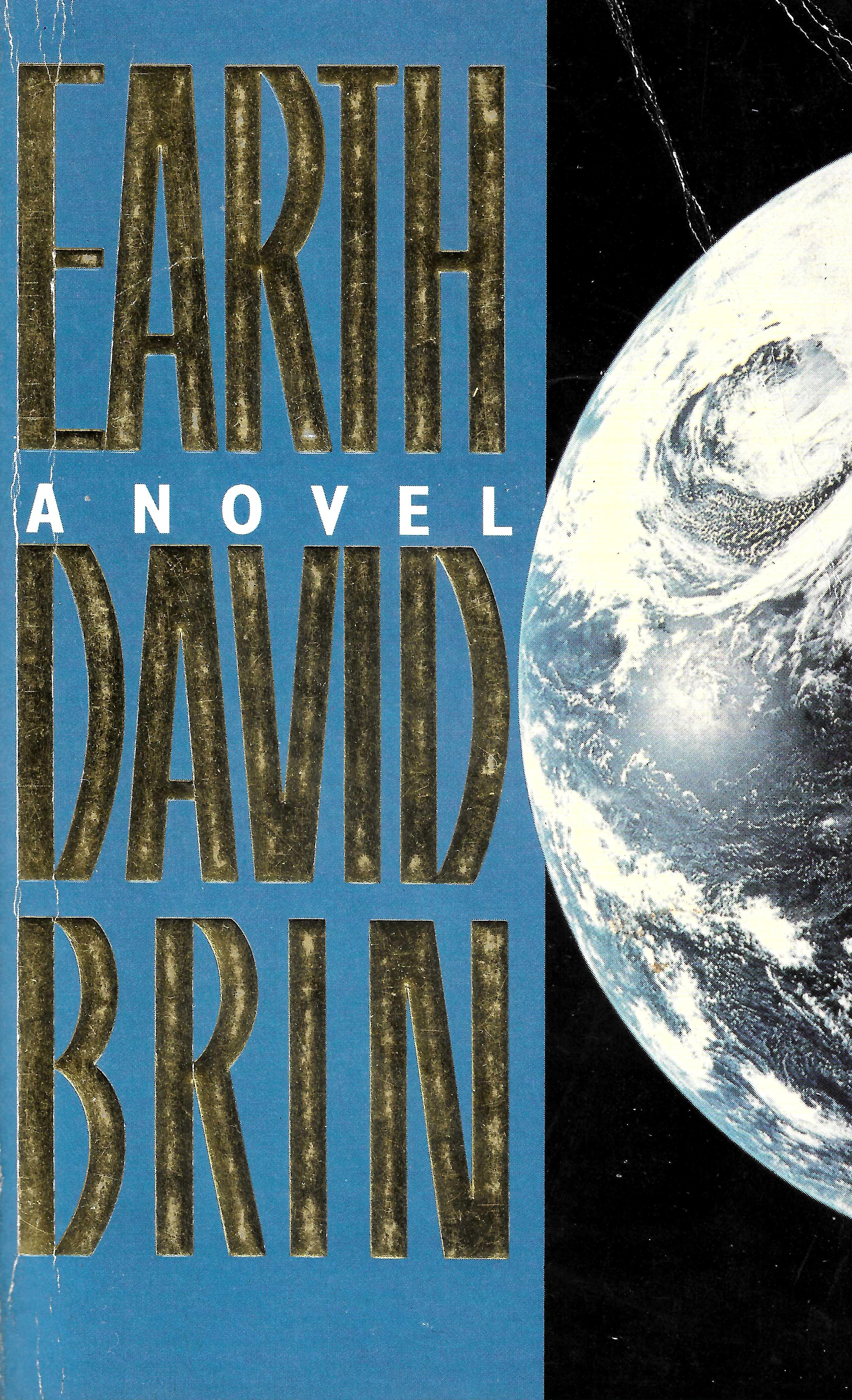
"Earth" by David Brin - 50% review

Science fiction novel "Earth" by David Brin is a complex story set in near future. However, it is really hard to read. I read half the book and then decided to stop. It reads as if documentary story rather than truly science fiction novel.  

Science fiction plot itself revolves around discovery of artificial black holes in the center of earth. However, lot of pages are devoted to description of future Earth where global warming has melted Antarctica and where several religious sects sprung up which are devoted to Gaia or Sun. Many animals went extinct and genetically created nd housed in de novo in Arcs around  the world.

The book talks about Helvetian war, kind of WWIII, that supposedly happened in central Europe, against Alpine gnomes (people who controlled treasures held in Swiss Banks). Strange idea. 

The book is set around year 2032. Earth population is ageing. Vegetarianism is widespread. There are floods across globe, population re-location and strict birth control projects are common. 

In addition, the author also inserted pages dedicated to evolution of life on Earth.    

In the end, this novel is a mix of reality and some science fiction. I found it difficult to follow. It has to many separate, unrelated topics.

posted by David Usharauli 

Wednesday, August 5, 2015

"The Declaration" by Gemma Malley

I liked this dystopian novel. The main events are set in the future, year 2140, 70 years after pharma company had discovered medicine (some kind of stem cells) that allowed the people live forever without ageing.  

However there is a catch. Since people live forever, there is extreme fear of overpopulation. This led to enactment of law called "declaration" where people declare that they would accept longevity at the expense never to have children. 

A child who is born from people who have signed the declaration but ended up anyway with a child, is called a surplus. In this future society surpluses have no right and treated as a servant slaves. Surpluses are hunted down by Catcher, a brutal secret service with omnipotent power over both surpluses and even legals. Surpluses are thought to think about themselves as a burden to the society and to hate the parents who are criminally negligent for allowing surplus to be born in the first place.

For some reason, this dystopian future is characterized by energy deficiency.

As it always happens, there are enough people who consider declaration law to be against the law of nature and who form underground movement to counteract governmental oppression.

In my view this novel is remarkably good. There is nothing extra in it. The author nicely captures the transformation of surplus Anne undergoes from obedient servant into free thinker and explains what motivates such changes. 

David Usharauli