Showing posts with label Biotech / Health Policies. Show all posts

Tuesday, March 14, 2017

"from ALCHEMY to IPO" - review

I found this title "from ALCHEMY to IPO" when browsing openlibrary.org website. It  was published in 2000 and recounts some of the details of how biotech industry came to existence in late 1970s in USA.

The author, Cynthia Robbins-Roth, as she writes, was one of the early employees of biotech pioneer Genentech (at the time of the book publication though she had her own biotech consultancy business). Genentech is considered even today after 40 years since its foundation a leading biotech company and consistently ranks as one of the best, if not the best place to work for biotech oriented researchers.

Regarding this book. It is quite superficial and takes overly positive look at the industry. It lacks critical assessment. It is for readers who do not look for understanding but rather for general information regarding what is biotech and how it started out.       

posted by David


Monday, July 4, 2016

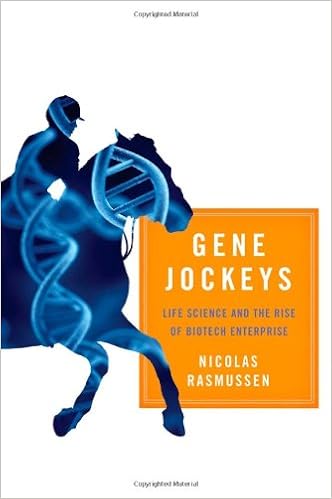
"Gene Jockeys": first 5 DNA recombination drugs that created biotech industry

In "Gene Jockeys" Nicolas Rasmussen revisits evens that led to development of the first 5 major biotech drugs [based on DNA recombination] that created new biotech industry.  

These 5 recombinant drugs were insulin, human growth hormone, interferons, erythropoietin and tPA. Several pioneering biotech companies such as Genentech, Amgen, Genetics Institute, Biogen, Cetus and events and people who led drug development are being discussed, frequently in too much details.

The author tries to explain how economical context drove biotech frenzy in early 80s and how within 15 years it became transformed from "open" science-driven industry into closed patent courts-supported closed monopoly environment.

It was so revealing to know that all these 5 drugs were simultaneously pursued by several biotech companies as if they were eavesdropping on each other's work and did not have any original ideas themselves.

posted by David       

Wednesday, March 9, 2016

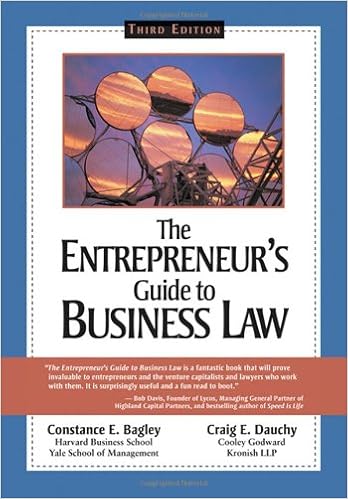
The Entrepreneur's Guide to Business Law (3rd Edition)

For many people to be a successful entrepreneur or the owner of their own business is a big accomplishments. And it is. But it is very tough. Though US has a very high ranking in "ease" of "starting business", after reading good part of this book I am not so sure about validity of it anymore.

This particular book is a 3rd edition in this series, published in 2007. These series have a good reputation for providing accessible and easy to digest information about almost every step of entrepreneurial endeavor.  

I do find it quite easy to read. One really good thing about these series is that the authors provide the real "business" world examples for each topic.

In my view, these series will be very useful for someone who plans to start business or occupies executive position in any private company. 

posted by David Usharauli

Saturday, February 13, 2016

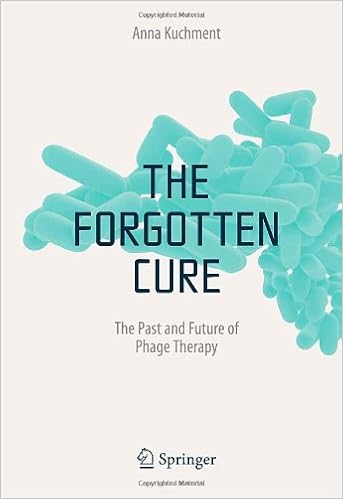
My review of Anna Kuchment's book "The Forgotten Cure: The Past and Future of Phage Therapy"

This is a science/biotech book everyone should read. It reminded me books I read when I was in school about science discoveries, Columbus, Cook, Laperouse voyages to new World, discovery of photosynthesis.      

Anna Kuchment did a superb job by putting together a succinct story about bacteriophages. This is a personal story about scientists who contributed to the discovery of bacteriophages, story of scientists who strongly believed in medical significance of this tiny viruses, who defended and kept alive science and practical applications behind phages, even though frequently it seemed if the whole world was against them. 

Phages are tiny viruses which target bacteria. Phages are everywhere, including our bodies. Each phage is specific for certain bacteria only. Such selectivity of phages positioned them as a very important alternative to antibiotics. Moreover, in many occasions, phages show superior anti-bacterial activity in hard to treat bacterial infections in human, including against antibiotic-resistant bacterial strains. And on the top of that, phage therapy is almost without any side-effects whatsoever. It is quite mind boggling that FDA did not find yet a courage to approve phages for human therapy (it is approved as a food "sterilization" method). But therapeutic application of phages will come too. We can't continue ignoring this vast resource of mostly "friendly" viruses.

posted by David Usharauli
             

Tuesday, February 9, 2016

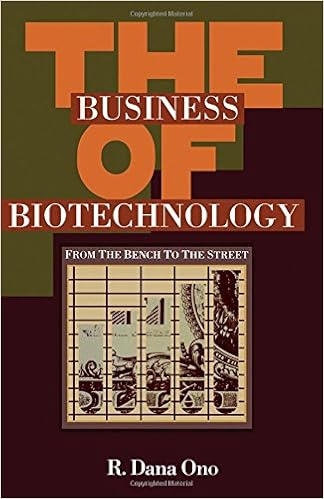
1991: Business of Biotechnology: From the Bench to the Street


It was quite interesting experience reading book about biotechnology written in 1991. First chapter, by Robert Teitelman, was actually very good. However, later chapters failed to deliver anything interesting or memorable. After reading several books in this category I am convinced that only books that contain real world story or personal accounts provide any value. Still, people are putting all kind of generic information that is dry and uninteresting. This particular book has 1 or 2 stories that resonated with me but the rest of it was poorly written and dull. 

posted by David Usharauli

Tuesday, December 1, 2015

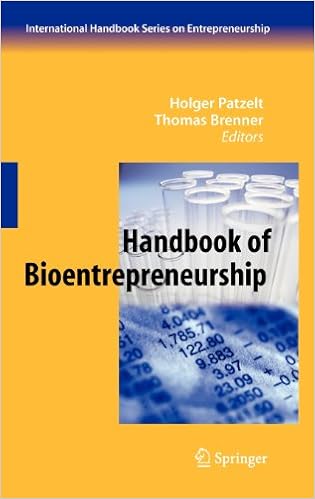
"Handbook of Bioentrepreneurship" - How Kirin founded La Jolla Institute for Allergy & Immunology

This book named "Handbook of Bioentrepreneurship" was available so I decided to read it. Now, I am a research scientist who wants to learn the structures that allows initiation of biotech ventures. 

I read few biotech-related books and absolute majority of them have one major issue that completely makes the book worthless: they are just filled with generic nonsense numbers and theoretical discussions no one needs. 

This book was not different in this regard. It had 12 chapters, I believe, and only one chapter was really engaging to read and you know why? Because it had analysis of real events that happened  to a company in Japan when it decided to enter biotech field.

Actually it was really fascinating story. In late 70's, an Japanese brewery company, called Kirin, decided to diversify their product line by entering into biotech industry. This chapter in book described how mid-level Kirin managers showed entrepreneurial alertness that allowed Kirin, in collaboration with Amgen, to develop FDA-approved recombinant erythropoietin, one of the first biotech drug. 

Interestingly, this collaboration with Amgen was so successful that Kirin later founded wellknown La Jolla Institute for Allergy & Immunology in San Diego to develop treatments and cures for immune system disorders. This is not well publicized story because even La Jolla Institute for Allergy & Immunology website does not mention it in their "history" page. Only by noting that Dr. Makoto Nonaka, the Institute's founding President, and Dr. Kimishige Ishizaka, the Institute's first Scientific Director were of Japanese origin  one could make connection between this premier American scientific institution and Japanese brewing company Kirin.

posted by David Usharauli

Monday, October 26, 2015

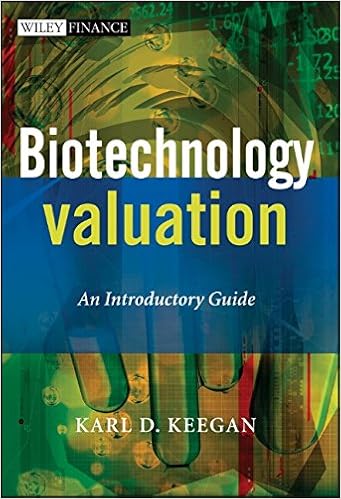
Biotech valuation


I tried to read these two books to introduce myself to biotech valuation. I had no clear idea what actually "valuation" meant. I wanted to learn a little bit about biotech investment strategies and how to appraise a company's financial "worthiness".  

I thought these books would be easy to understand for the beginners who are not familiar with professional assessment of biotech stocks [I thought books were about it]. However I was mistaken. Book is filled with all kind of graphs and mathematical equations or formulas that had nothing to do with investment and were more advance than my math skills could handle.


Beyond numbers, however, books contained little useful information for me. I thought I would learn, for example, why a particular biotech pipeline is valued so and so. Real life examples. I found none of these. What a waste of time.

posted by David Usharauli


Tuesday, October 6, 2015

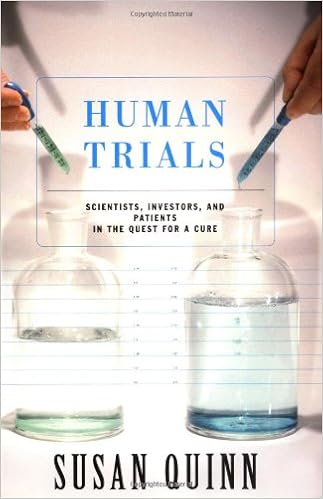
"Human trials" in oral [antigen] tolerance by Susan Quinn

I was trying to get hold of this book for some time and in the end I found it at Open Library. I was interested to read it once I realized that it described a biotech company, then called Autoimmune Inc.,[now no longer existing], that have tried an "oral tolerance" approach to treat autoimmune diseases such as multiple sclerosis (MS) and rheumatoid arthritis (RA).   

Now, this book was published in 2001. By that time, Autoimmune had conducted two major trials, one in MS, and another in RA, and both of these phase III trials failed. As book described, the main reason for those "failures" was unusually high placebo effect.

Book itself is an interview-observation type of work. It focus is people involved in oral tolerance trials. Its main character is Howard Weiner, a neurologist at Harvard Medical School, whose lab provided the scientific basis for oral tolerance trials. 

Oral tolerance is a classical immunological phenomenon. Basically, it postulates that orally taken antigens induce special type of immune response that can cross-inhibit inflammatory immune response. So, the idea was that if patient with autoimmune disease takes target [MS or RA] antigens by oral route, then these antigens will induce special population of T cells which in turn would inhibit disease causing inflammatory T cells.

Today we know that there are several types of regulatory T cells (such as Foxp3+ T cells, IL-10+ or TGFβ1+ Tr1 cells) that can be induced by oral antigens. However, even today, after 15 years, we still have no clear understanding of exact mechanisms responsible for oral tolerance effect.

The story in this book is a prime example of difference between [bio]chemical and purely biological [drug] approaches. Biological approaches, such as oral tolerance, adoptive T cell therapies, are more complex because they involve live cells whose functionalities are not completely understood and they still store lots of unexpected surprises.

posted by David Usharauli
  

Saturday, September 26, 2015

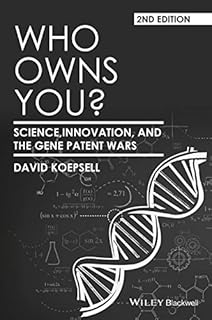
Review of "Science, innovation, and the gene patent wars" by David Koepsell

There is a phrase "not to judge book by its cover". However, here for this book its meaning is completely reversed. I am sorry to admit but this is one of the most useless book I came across, though it has quite cool cover. 

I am really interested to learn more about some of the legal reasoning behind the biggest patent law cases of the past few years that basically transform the landscape for biotech patenting.

Filled with numerous repetitive statements the book fails to even deliver the promise of its title. Only relatively useful part of the book is related to the actual description of Myriad case.

But the author never explained why even assuming in arguendo that third party, for example, some Bay area biotech company has a patent on blue eye gene, it somehow make them to own or control your blue eye gene?

The author has put in the title big words such as "science" or "innovation", but somehow failed to mention anything about them (except some 9th grade level intro about DNA organization).

I was expected that the author would explain why Chakrabarty decision had ballooned into gold rush for patenting naturally occurring genes. It seems that Myriad case wasn't a new decision but rather it re-established the original meaning of Chakrabarty decision written some 30 years earlier.

In addition, the author does not discuss the outlook for biotech patenting in the wake of Myriad case. For example, can one patent any naturally occurring, but newly discovered molecule with anti-viral or anti-microbial properties? Current patent law cases suggest that the answer is negative for this question. You have already guessed obviously that this book does not say anything about it.

posted by David Usharauli


Sunday, September 6, 2015

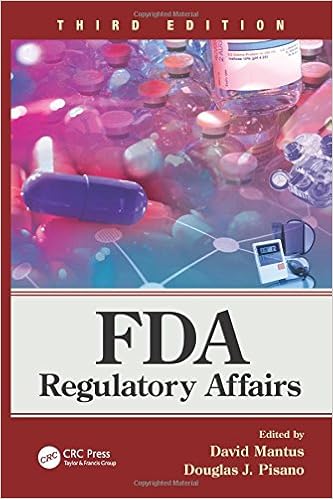
What FDA does and how FDA does it?

Federal Drug Administration (FDA) is a federal agency that controls drug and biologics approval process. FDA decisions make or sometime breaks the companies.   

This book, edited by Douglas Pisano and David Mantus, is a compilation of FDA related regulations and law applicable to biotech/biopharma drug development.

Of course no single book can provide full picture of FDA. Though I would say this book does some decent job, especially one chapter with tips how to find FDA related information online. Chapter about IND is also quite good. 

Primary interest in this book from scientist's point of view are chapters about IND and NDA applications. I personally learned that new law enacted in 2012 increased by 60 days both standard and priority review times necessary for NDA processing (8 months for priority review and 12 months for standard review).

Also, I learned that until FDA approves new drug, drug manufacturer or its associates cannot mention anywhere that their drug is "safe" or "effective". I did not realize that such rule existed. In my work, I frequently encounter science articles where IND/NDA-associated drug is discussed. I have not paid attention before but now it will interested to verify how drug-sponsors adhere to this FDA regulation.

posted by David Usharauli

Saturday, August 29, 2015

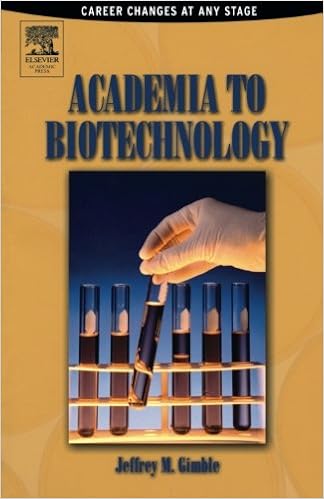
"Academia to Biotechnology" by Jeffrey M. Gimble

This book "Academia to Biotechnology" by Jeffrey M. Gimble was published in 2004. Its author worked both in university and biotech industry. It is relatively short book (less than 200 pages), and it has an interesting title. It summary promised to reveal some first hand knowledge about career options in both academia and biotech industry.

It is always interesting to learn more about people's personal experience in science. However, for some reason, book authors, including this one, rarely talking about their own personal experiences, just providing generic "wisdoms" similar found in any management books.

Though this book start quite boldly, within few pages it starts to become boring and utterly disappointing. It absolutely lacks any personal touch. What is the point writing book about your career experience if you do not provide meaningful examples?

I can understand politeness, but if politeness prevents you writing book that has any value for a reader, then maybe it is not right moment for its publication. Just talking about patents, grants and publication in general terms do not constitute a value. 

I am not sure whether my criticism should be directed to the author or to the publisher. Both of them should carry a burden and incentive to publish books that provide meaningful values. With the regard of this book, however, both the author and publisher failed to leave up to reader's expectations.

posted by David Usharauli


Thursday, August 27, 2015

Life after academia. Review of "Alternative Careers in Science" by Cynthia Robbins-Roth

Getting tenure-track positions in academia are becoming more unrealistic as time passes. In my view, there are 3 reasons for it: (1) abundance of qualified but cheap scientists (mostly postdocs, mostly from oversees), (2) reduction of federal funds for basic research and (3) introduction anti-ageing laws that allowed tenured academicians to stay in their position indefinitely.

So what can you do if you like science, but due to circumstance beyond your control, would not able to accumulate sufficient academic scores (mostly papers in top journals, plus little help from your supervisor) to qualify for artificially complicated academic position?    

I imagine that in the beginning almost 100% percent of PhD students or postdocs believe that they will be "one" who can do it that impossible task and land the position in academia. however, as time goes, many will realize that it is better to look for some alternative career options.

The best option is, of course, to found a company. If you can do it, then only thing left is to applaud you. Though, in reality very few people can have necessary knowledge and connections to start  a science-oriented business. 

The most common alternative is to switch to industry. If you are lucky you may end up in a company that do a cutting-edge science. However, ordinarily biomedical industry is focused on very narrow field and quite happy to just do repeatable and scalable science. There is lots of misunderstanding about what exactly biotech industry does. Many believe that biotech industry does innovative work, from traditional science point of view. In reality, so called "innovations" that are coming from biotech are mainly to do with "formatting" of scientific innovation generated mostly in academic centers.

Basically, if you just started thinking about life after academia, you may consider this 2006 book. To tell you truth, it is quite "old". In fact, it is so old that some of the websites it refers to no longer exist :) But if you can get it from local library or through friends or colleagues, try it. It have some useful generic information. One thing that is missing from those individual stories told in this book is some kind of authenticity. The way the authors are describing their transitions from one field to another feel like "packaged for sale" stories.

posted by David Usharauli

Saturday, August 22, 2015

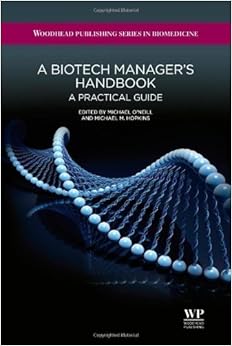
"A Biotech Manager's Handbook: A Practical Guide" by O'Neill and Hopkins

I am very curious person and like to understand how things really work. A biotech industry is a complex network of small research labs or campuses where the majority of new therapeutic drugs originate. It is the place where great academic discoveries will be tested and baptized in the real world. 

But how biotech works? Interestingly, majority of biotech companies never make any profit during their life-span. Almost 40% of investments in biotech sector are never recovered, either. So, why are investors still continuing investing in these companies?

Now, if you think this book would provide an answer, you are mistaken. In general, I started to realize that no single book can provide an adequate answer. For me books are like a long reviews where the most important parts should be "personal observations" and/or inclusion of information not readily available in public domains. This book tries to do some of it but it has still a long way to go before achieving any meaningful impact on the reader, like myself.

posted by David Usharauli    

Wednesday, August 19, 2015

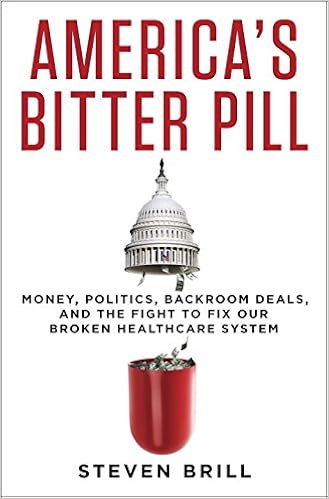
"America's Bitter Pill" by Steven Brill - Review

What is the most frequent wish among people all around world? Most likely it is "to be, to stay and to become healthy". Compared to health everything else fades. We believe we can do anything if we are healthy. 

Universal health care law in USA, called Affordable Care Act (ACA of 2010), is a relatively new law. There are many myths about ACA, also known as Obamacare, after President Obama who singed it into law in March 2010.

This book by Steven Brill is an excellent review of how ACA came about. Steven Brill dissects pre- and post-ACA health care environments and explains what was accomplished by ACA and in what areas it failed to deliver.    

The book also explains how legislation in US is working why it is so susceptible to interference from outside interest groups (lobbyists).

Why is healthcare in US so expensive? According to Steven Brill's book 3 main categories determine health care cost in US: (1) cost of hospital treatment, (2) cost of medical devices and (3) cost of brand-name prescription drugs. Surprisingly, the role of health insurance companies are minimal in overall rise of healthcare costs.

I was disappointed to learn that Obamacare did little to modify these 3 major costly categories. Basically new law does not seem to make healthcare less expensive. It appears that without federal subsidies to cover portion of premiums, Obamacare would have been too oppressive for an average US resident. 

Still, as Steven Brill himself admit, when it comes to health, people rarely think twice whether to get treatment or not. Moreover, people want to get the best treatment available, no matter what it may cost. So, in this regard, by abolishing (1) pre-existing condition exception and (2) upper limits on health plan coverage, ACA law is first step towards right direction.

posted by David Usharauli


Monday, August 17, 2015

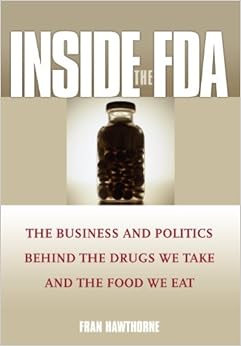
"Inside the FDA" by Fran Hawthorne - Review

Republished with some modification.

I have decided to read this book to become more familiar with the FDA's role and its impact on BioPharma. And also because the author, Fran Hawthorne's writing style is quite easy to follow and isn't boring.

Of course, similar to her earlier book about pharma company Merck, Fran Hawthorne's writing failings are in its content. This book, rather than being "inside the FDA" is more better described as "about the FDA".

The author provided short overview how FDA was established and how it is accomplishing its duty to keep the public safe from poor quality drugs or food. However, it is based on publicly available information that does not really explain how is works.

In addition, since the book was published in 2004, it is probably outdated. The book simply reinforces long-held public opinion that politics does play a role in how FDA, as a federal agency, does it's work. Rather being totally "objective", it appears that FDA's visions undergo modification whenever new directors are appointed.

Another topic discussed in this book is the FDA's approval process. The book tend to imply that FDA reviewers are near "perfect" scientists whose opinions should be followed strictly no matter what. This is, of course, the most unrealistic scenario. 

posted by David Usharauli  

"The Startup Game" by William H. Draper - Review

I am naturally curious about people who can create values from "zero".   

One things that really interests me is the dilemma that exists in startup world: people who have financial resources lack scientific or engineering knowledge, and people who have scientific and engineering knowledge lack necessary financial resources.

I thought this book would provide some answers to this dilemma. The author, William H. Draper, is  third generation venture capitalist.

However, book failed to live up to my expectations. First of all, the author's background disqualifies him, in my view, to pontificate about startups. He was born in very well to do family. His father was General in US army and later became one of the first venture capitalists in USA. It appears that the author had never experienced difficulty associated with starting something new. He talks about venture risk but he himself never really risked anything substantial in his work. He just happened to be lucky enough to have an access to surplus money due to his connections (that existed due to his family position). 

Book fails to explain how to raise money and how to understand which idea is worth of investment. The author did not mention what was his personal ratio of successful versus failed investments. Every person with common sense and someone else's money could make random investment decisions, out of which some would end up to be successful. The author himself admits that one good investment can be worth of 9 failed investments. I do not think that to have such ratio would require specialized education or knowledge.

David Usharauli  

Saturday, August 15, 2015

The Merck Druggernaut by Fran Hawthorne - Review

Year 2003. If one could imagine the worst time to publish the book that praised the Merck's pharma business, then the author Fran Hawthorne couldn't have done the better job.

Published on eve of Merck's Vioxx scandal, this book provides mostly positive, though superficial look at Merck's history and its tradition to put "the patients first". 

Within 1 year, Merck's Vioxx scandal was an example of what is wrong with big pharma (suppression of negative data about drug's side effects, pricing of drugs that are based not on actual drug benefits but on market tolerance threshold and widespread abuse of patent law to prevent cheap version of the drugs to reach the market).

Book itself is easy to read but it is totally useless. After first few chapters, the author's focus wanders around and discusses among other things how pharma sales reps used to interact with medical providers (i.e. doctors). 

One things is clear from this book: when the company goes public, all hell breaks loose. Until Merck went public in 1995, Merck was the best pharma company in the world (in basic pharma research, in number of drugs developed and approved, and consistently listed among the best and the most admired companies). 

The author's mission was to show to the reader how Merck is (or was) so different from other pharma companies. However, in the end, Merck appears to be no different at all. There is no surprise here. Publicly-traded companies are subject to shareholders pressure. Only thing that matters afterwards is a profit. Prestige, reputation, curiosity and culture go out of window.

posted by David Usharauli   

Wednesday, August 12, 2015

"The Cell Game" by Alex Prud'homme - Review

Republished with some modifications.

When I started reading this book I would never have guessed that one of its main characters would be Martha Stewart. I thought the book was about the biotech company Imclone (and it is).

I did not know much about Imclone before this book. However, I do remember that when I arrived in USA in 2004 to start my postdoctoral studies, one of the main news on TV was about Martha Stewart going to prison for insider trading. Who knew that she ended up in prison because of her connection to Imclone's boss (both are of polish origin).

This book is more like a biography of Imclone's co-founder Sam Waksal, a very charismatic person. It describes his personal life with great details. The author portrayed Sam Waksal as a habitual liar, someone who is hungry for money and luxurious living, who could easily attract people and used to get what he wanted (of course, until 2003, when he went to prison for insider trading and related charges).

Sam Waksal had been running Imclone for almost 20 years. The fact that he managed to keep the company alive for so long without having a single product does indicate that he did has an extraordinary qualities. People thought he was a great scientist with great social skills. In late 2001, Imclone made headline news in USA by revealing its $2 billion deal with Bristol-Myers Squibb to develop and commercialize cancer drug erbitux (EGF-R antagonist). It was the largest deal in biotech world at that time. However, within next 2 years, almost all of the Imclone's top executives were either in prison or no longer with the company.

What happened? Imclone's story is a classical example of corporate hype. After reading this book it becomes clear how easy it is to manipulate media and investors. Imclone's story reminds us about the disconnect between making science and making money.

But I also want to point out that science behind Imclone's drug Erbitux was ahead of its time and later discoveries in cancer field vindicated Imclone's management's position regarding some of Erbitux [failed] trials (for example need for patient stratification based on cancer genetic makeup). In fact, few years later after Imclone's debacle Erbitux was approved by FDA for use in cancer patients.          

posted by David Usharauli      
 

Tuesday, August 11, 2015

Cetus legacy: a Nobel Prize winner biotech company

Polymerase chain reaction (PCR) is a cornerstone technology of modern biomedical science. Essentially, genomic DNA and RNA science advances that have been occurring for the past 25 years began with PCR. No other biotech invention so far compares to PCR's impact on science. PCR is so ubiquitous nowadays in both experimental or clinical labs that it is seen as just another "method". 

However, when we talk about methods we rarely think about who invents them or what it takes to invent them.

How many people have heard about Cetus? It is very likely that the vast majority of people using PCR today have no idea about Cetus.

The short book by Paul Rabinow titled "Making PCR" is a really wonderful "live" account of Cetus and the people there who invented PCR. Cetus was a biotech company even before Genentech. Kary Mullis was a Cetus employee when he conceptualized and did initial PCR validation experiments. 

For his role in PCR invention Kary Mullis was awarded Nobel prize in Physiology or Medicine in 1993, the first ever Nobel prize awarded to a work done at biotech. 

Curiously, this is how Kary Mullis is described in the book "at almost every scientific retreat [he would propose] a number of wild ideas, some of which were flatly wrong because he wasn't really familiar with some of the most basic aspects of molecular biology. And also because he was abrasive and combative and often times his comments would be counterproductive in meetings where people have to try and work together. Mullis had a grudge against his critics and they had a grudge against him". 

At some point Cetus management seriously considering "firing Mullis outright". It is obvious, today's workplace would reject Kary Mullis-type of personality. 

In the end, Cetus disappeared, Kary Mullis became outcast but PCR stayed and transformed science and medicine.   

David Usharauli   

Saturday, August 8, 2015

Genentech: How it all started

Re-published with modifications.

This book by Sally Smith Hughes about the biotech pioneer company Genentech is a very good read. Strangely, it starts to captivate you and then suddenly it ends. Kind of positively disappointing.

For me as a scientist the most revealing part of the book was the role of Bob Swanson played in founding Genentech. He was a young man (only 28 years old), formerly a junior partner at the venture capital firm Kleiner & Perkins, but presently unemployed when he and UCSF scientist Herb Boyer decided to form a partnership to commercialize recombinant DNA technology. Bob comes across as an ideal entrepreneur. Accounts of his vision in the potential of new DNA recombinant technology and his tireless networking to secure initial seed money to run Genentech's proof of principle experiments, are most fascinating. Clearly, there would have been no Genentech without Bob Swanson.

Other parts of the book related to science of producing first human recombinant somatostatin, insulin and growth hormone seemed secondary in nature, in my view. I would only highlight that at this stage of its corporate development Genentech was basically an academia-type company without academia-type hierarchy. Dream place to work for scientists who wanted to show to their peers in academia that they are scientifically "equal" and maybe a little bit "richer". Of note, after more than 30 years, Genentech, now part of Roche, still stays one of the best places to work in surveys.

The author, however, did not discuss much about what happened to Genentech after initial years of success. Though, admitting that it was rescued by Roche in the early 90s suggests that it went through some difficult periods and was not able to survive as a large independent biotech company.

David Usharauli