Showing posts with label history. Show all posts

Sunday, December 30, 2018

Robert Harris' "An Officer And A Spy": Dreyfus affair, a turning point in European history

Robert Harris has a talent for creating a good suspense stories. This book describes in vivid details how Dreyfus Affair unfolded in 1890s in France.

Dreyfus was an young French military officer of Jewish origin from German-occupied Alsace. In 1894 he was arrested and charged with spying for Imperial Germany. He denied any involvement in any conspiracy against French Republic but due to widespread antisemitism then in France he was found guilty anyway.

Robert Harris begins the story with Dreyfus conviction in military court and then slowly and methodically exposes all the inconsistencies and prejudices found in this affair. 

This is a remarkable story and anyone should know about it.    

posted by David 


Wednesday, February 7, 2018

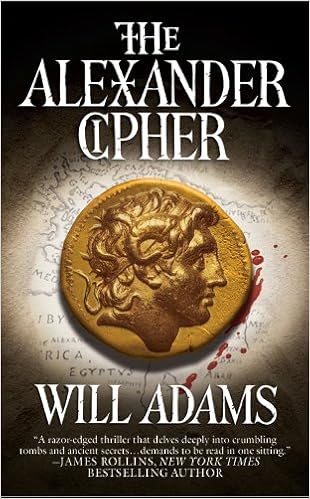
"The Alexander Cipher" - secret of the tomb of Alexander the Great

This novel is part archaeology part political thriller. The territory of ancient Macedonia covers modern-day Greece, Bulgaria, FYR of Macedonia and Albania. Wealthy Greek Macedonian Father and Son want to unify these separate territories into one country and resurrect old Macedonia. But to accomplish this goal they need something that make ordinary Macedonian people to rise up. 

They think the goal can be achieved if the tomb of the Alexander the Great is discovered. So they finance archaeological excavations in Egypt to find it.

Indeed, Daniel Knox, becomes involved in its discovery, by chance.

I liked this book. It has some some history, some realism, some fantasy. Egypt is shown with its powerful ministry of Antiquity, its wealthy, cruel but 'patriotic' magnates and ordinary Egyptians who try to do their best.       

posted by David Usharauli

Sunday, November 27, 2016

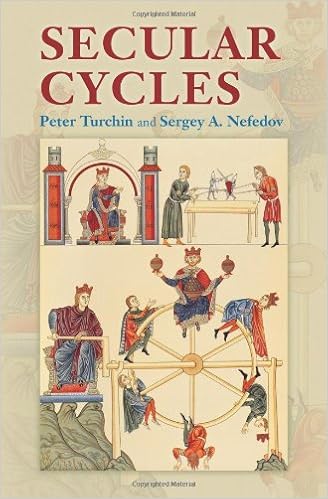
Rise and Fall of the States: Secular Cycles

In this book the authors analyze several correlations that lead to rise and fall of the States based on population growth, labor market demands and excesses of upper classes.

I did not find their approach particularly innovative. One thing I remembered from this book is "plateau" stage they called stagflation. This is a stage in state's secular development when population saturation leads to wage decline that coincides with maximum profits for upper classes.

I would say that USA has entered stagflation phase in the beginning of 21st century. Based on the authors evaluations of several historical Empire States that went through secular cycles, it appears that stagflation phase could persist for decades, even for centuries. Though it inevitably leads to a crisis and fall, followed by renewed cycle.   
posted by David


Wednesday, November 16, 2016

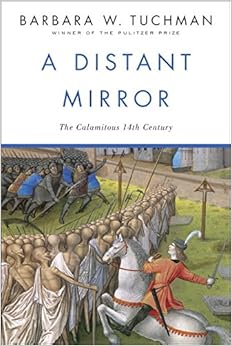
A Distant Mirror: The Calamitous 14th Century

This book an excellent overview of Western Europe during 14th century, though more accurately, it is a history of France as it existed in 14th century.

14th century in France is remembered mostly for 100 Years War fought between France and England and black death, a deadliest pandemic in human history that reduced total human population by 1/3. 

This book is mostly focused on relationships between nobles and Kings and portions are devoted to Church matters and peasant revolts.

It is interesting and easy to read, though I would say it is a little bit boring in the end. 

posted by David


Sunday, October 23, 2016

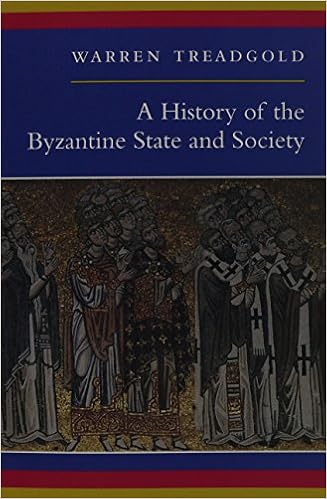
1000 years of Byzantine Empire


This is a huge book but in my view for non-professionals who are interested to know more about Byzantine Empire it is a very good and complete intro.

It covers both its political history and to some degree its social aspects, especially its religious history. In fact, it is hard to find any other country where the nuanced religious questions mattered so much for the society as they did in Byzantium.

While Byzantium as a state disappeared in 15th century, the question remains which country "inherited" its ideas? Greece, Turkey or Russia, other?

It is interesting to note here that Turkish Ottoman Empire covered almost exactly the same territory as the Byzantium did at its height.

posted by David  


Tuesday, September 13, 2016

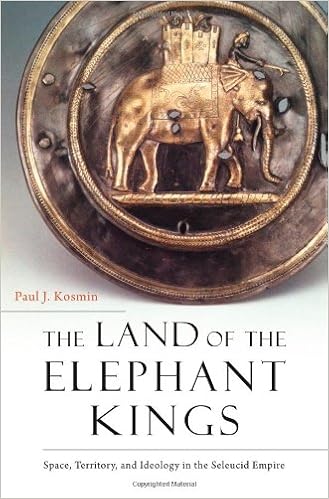
Seleucid Empire: empire without trace

Seleucid Empire existed for more than 200 years inheriting the largest part of Asian territories conquered by Alexander the Great during his Asian campaign. 

Its history is not well known. It was founded by one of the Alexander's general, Seleucus, around 312/311 B.C. This alien Macedonian (seleucid) dynasty ruled people of middle east who were before ruled by Achaemenids of Ancient Persia.

For me the most intriguing question of post-Alexander's age is how it was possible that people of Middle East accepted foreign rule without much resistance.

However, this book did not even discuss it as if the answer was obvious one. Not really. Moreover, book content is organized quite unusual way making it difficult to follow and derive any valuable information, if any. It really bothers me when I see that book has an interesting title but content is totally useless and hard to digest. I can not recommend this book to anyone. 

posted by David      

Sunday, August 21, 2016

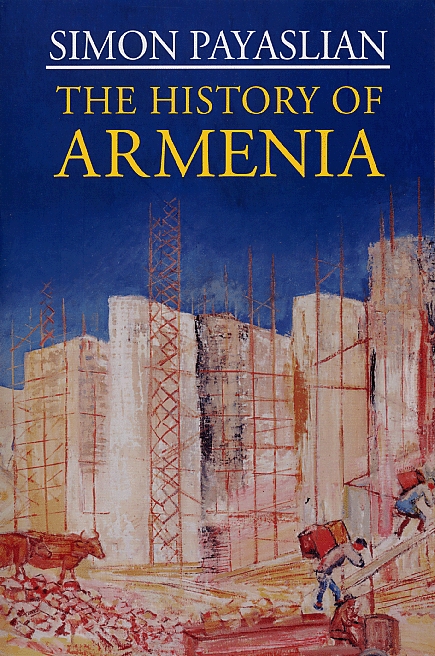
Review of "History of Armenia" by Simon Payaslian

Most people are familiar with the history of their own nation. Frequently this knowledge is acquired in schools during formal education. However, school textbooks rarely provide the full picture and usually they can be quite one directional.    

Armenian nation is one of the oldest nation in the south Caucasus/middle east. I was curious to read their history as written by Armenians.

I found this book very unsatisfying. I felt that it is written in a haphazard way, jumping back and forth chronologically. It specifically focused on Armenia's relationship to great geopolitical powers such as Persia, Byzantine and almost totally ignores its historical relationships with other Caucasian nations. For example, when talking about Armenia between 5th century BC and 20th century AD, the author only twice mentioned Armenia's neighboring nation of Georgia. Now this cannot be historically accurate situation.

I was especially interested to learn about Armenian Bagratuni Royal family and its connection to Georgian Bagrationi Royal family. However, the author is totally silent about it. So, for me  it appears that this book is written specifically for Armenian diaspora who lives outside Armenia proper and who might be interested in big picture rather than in accurate details.   

posted by David Usharauli  

Sunday, August 14, 2016

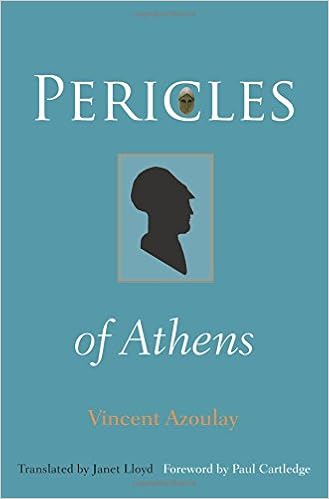
"Pericles of Athens" by Vincent Azoulay

This is very interesting historical analysis about Pericles. I came to know about Pericles after reading historical fiction series by Gary Corby. In Athenian mystery series Gary Corby provided picture of Pericles as a great Athenian statesman (that he was indeed).   

So, I decided to further read about this real life historical figure who led Athenian maritime empire for 25 years. 

Initially I thought it will be organized chronologically and based on Pericles biography, but in fact it was organized by topics that the authors thought were relevant to understand 5th century BC Athens and Pericles role in city's life.

Over centuries since fall of ancient Greek civilization educated establishment in the West took mutually exclusive view of Pericles. Until 19th century, most writings dedicated to ancient Greek considered Pericles in negative light due to Athens legacy in Peloponnesian war that ended in its defeat by Sparta and its allies. Many blamed Pericles for initiating this great war and leaving Athens unprepared.

However, opposite view shared by the author of this book suggests that Pericles was not in a position to single handedly decide the fate of Athens but rather he was a great statesman that skillfully operated within the framework of Athenian democracy. The fact that Athens ultimately lost the war to Sparta indicates that Athenian democracy as it is existed in 5th century BC simply had not developed sufficient check and balances that ensures that state properly directs its resources independently who is nominal head of the state.

posted David Usharauli