Saturday, September 26, 2015

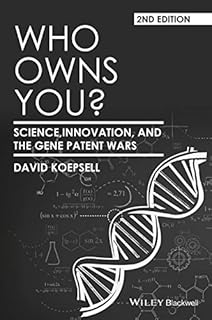
Review of "Science, innovation, and the gene patent wars" by David Koepsell

There is a phrase "not to judge book by its cover". However, here for this book its meaning is completely reversed. I am sorry to admit but this is one of the most useless book I came across, though it has quite cool cover. 

I am really interested to learn more about some of the legal reasoning behind the biggest patent law cases of the past few years that basically transform the landscape for biotech patenting.
Filled with numerous repetitive statements the book fails to even deliver the promise of its title. Only relatively useful part of the book is related to the actual description of Myriad case.

But the author never explained why even assuming in arguendo that third party, for example, some Bay area biotech company has a patent on blue eye gene, it somehow make them to own or control your blue eye gene?

The author has put in the title big words such as "science" or "innovation", but somehow failed to mention anything about them (except some 9th grade level intro about DNA organization).

I was expected that the author would explain why Chakrabarty decision had ballooned into gold rush for patenting naturally occurring genes. It seems that Myriad case wasn't a new decision but rather it re-established the original meaning of Chakrabarty decision written some 30 years earlier.

In addition, the author does not discuss the outlook for biotech patenting in the wake of Myriad case. For example, can one patent any naturally occurring, but newly discovered molecule with anti-viral or anti-microbial properties? Current patent law cases suggest that the answer is negative for this question. You have already guessed obviously that this book does not say anything about it.

posted by David Usharauli


Thursday, September 24, 2015

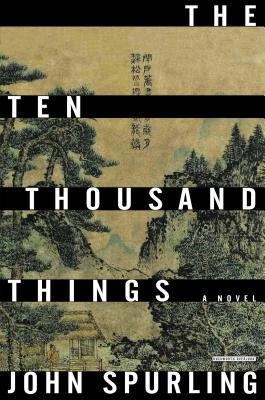
"The Ten Thousand Things" by John Spurling

This book is a literary masterpiece. Book is a natural blend of history and philosophy. Set in China in the middle of 14th century, it follows the life of low level [former] administrator, part freelance painter, named Wang, as he retires from active government duties under Mongol Yuan dynasty and tries to devote full time to landscape painting.   

While Wang himself is a low-level bureaucrat, his is descended from late emperors of south Song dynasty, a Chinese dynasty that was replaced by Mongol Yuan dynasty founded by Great Mongol Khan Kublai in the middle of 13th century. Several members of Wang's family, including his famous grandfather, General Meng, freely accepted Mongol rule and served under "progressive" Kublai Khan.

Wang has no personal ambition to achieve higher status in Mongol government. He is neither pro-Chinese nor anti-Mongol. Mainly he cares about stability and economic prosperity. However, by the time Wang takes official 3 year leave of office to spend some time in his country estate, Yuan dynasty undergoes degradation and China is falling apart.

On one his travels Wang meets young monk named Zhu. Zhu had left his village after surviving black plague. Zhu is confused. He offers himself to Wang as a servant, but Wang cannot afford or has any need to take him. Wang gives to Zhu a piece of paper that happened to have a nationalistic, anti-mongol sentiments printed on it (actually, Wang has found this note but hidden it in his pocket to avoid any provocation with local mongol authorities).  

As a story develops Zhu is that peasant boy, later leader of bandits, who will eventually found new Ming dynasty in China. This transfer of power from Mongols to native Chinese took decades and it was not always clear which rule ordinary Chinese preferred, especially after Zhu, as a new Emperor, periodically showed a paranoid behavior that invariable resulted in executions, including of old Wang himself. 

This is a backdrop of the novel seen with the eye of Wang and people he encounters. 

posted by David Usharauli

Wednesday, September 23, 2015

Review of "Brave New World" by Aldous Huxley

This book was first published in 1932. It was time of a great depression. World was in chaos. Future of world social and economic order was in turmoil. 

In the "Brave New World" Aldous Huxley imagined a new world order, set in far future (around year 2500 AD), where people are artificially divided into intellectual and labor caste system referred by Greek alphabet: alpha, beta, gamma, delta. In this world, children are created in an in vitro dishes (bottles) and modified by hormones to develop into appropriate castes.

Alphas and Betas are in charge of "intellectual" work, while Gamma and Deltas are destined for lifetime of menial works. Surprisingly, it seems that everyone is content with their role. How? Because of pharma drug called soma and childhood conditioning.

However, occasionally few individuals from top alpha caste did not seem to fit in. Probably they are "mutants" who develop some kind of resistance to conditioning and soma. These individuals are questioning their environment. They want to experience something "different" and as the novel develops, they are able to meet people in "reservations" who follow forgotten traditions and live in pre-historic fashion (religion, monogamy, disease, ageing).

Is such future possible? Now this is not a typical dystopian future since Huxley's world is "happy" and "safe" place, at the expense of truth or love or any self-expression like art and literature. It is an extremely utilitarian and consumerist world (but not a totalitarian world). It is highly controlled and highly organized society. But still everyone needs soma to feel good. It appear that only soma can keep this world going.   

posted by David Usharauli

Wednesday, September 16, 2015

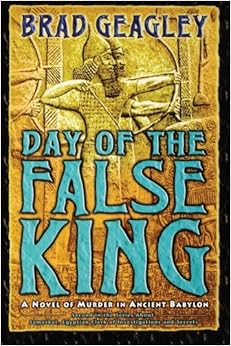
Review of Brad Geagley's historical novel "Day of the False King"

I really enjoyed reading this historical novel by Brad Geagley. It is so well written that when one reads it you don't feel that there is a single extra word in it. Everything is written with the purpose.

I also liked the fact that these stories are about ancient Egypt and Babylon and Mesopotamia, a period not frequently covered by novelists. 

This particular novel is a second novel in a series that follows Egyptian investigator named Semerket. Here, Semerket is sent by ailing Ramses IV to the Babylon with the secret mission to bring back the statue of Babylon's god Marduk. Pharaoh believes that by touching the statute of this alien god he will be cured.

Semerket has his own interest to go to Babylon. He is looking for his ex-wife he still loves dearly. 

During his stay in Babylon, Semerket becomes involved in investigation the death of member of local Royal family and he himself comes close of dying, but eventually with the help of local tribes and new friends he will be able to solve the mystery, find his wife and safely brings god Marduk's statue back to Egypt (for 1 year "loan").

The novel is filled with interesting information related to ancient middle east. It appears that already by 1100 BC Babylon had a working indoor plumbing that delivered both cold and hot waters. Another interesting story was about women-only sect called gagu who were part astrologer part businesswomen. Another story I found fascinating is that at that time Babylonians apparently could worship 60,000 different gods.

posted by David Usharauli