Thursday, August 2, 2018

Philip Kerr's "March Violets" - Detective story set in Germany in 1930s

This is a great book. A fictional account of private investigator, Bernie Gunther, working in Nazi Germany in 1930s. It nicely shows how totalitarian system is established in free country slowly, step-by-step. 

This book is a first novel in the series about Bernie Gunther. Bernie's character reminds me of Humphrey Bogart's character as private detective. Takes no bullshit. Although he tries to accommodate the regime to survive but he does it without losing his integrity. 

posted by David

Saturday, June 30, 2018

Robert Harris' "Conclave" --- a Review

I liked this book. The ending is completely unexpected.

The book opens with the death of old Pope. Dean of Cardinals, charged with organizing a Conclave to elect new Pope, has been finding out that those members of conclave who are leading candidates for new Pope are having questionable past that practically prevent them to be a Pope.  

So, it is now up to Dean to make decision how to handle the situation. In addition, a new person appears just before a conclave begins who claims he is a new cardinal elevated in cardinal position by late Pope in secret.

What other secrets are out there? It is a good read.

posted by David  

Saturday, June 23, 2018

Judge Dee's first case by Robert van Gulik

This book about Golden Buddha is part of detective stories whose main character is Judge Dee set in 7th century China. It is said Judge Dee's character is based on real historical Chinese statesman and magistrate. 

In this book Judge Dee is investigating murder of another Judge in a port town. 

Even though it is well written novel, I was not very impressed. Judge Dee is open-minded and curious personality but I did not see anything remarkable in his character to make me to want to read other stories.

posted by David


Thursday, April 5, 2018

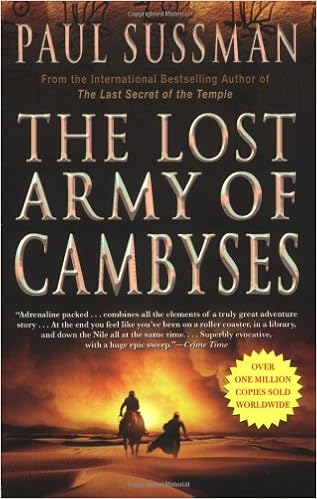
Review of Paul Sussman's "The Lost Army of Cambyses"

This is another historical detective set in modern day Egypt. When I started reading it I thought it was one of Will Adams' books. It had a very similar opening as in Adams' "The Alexander cipher" I reviewed few weeks back (in reality, it is likely Adams borrowed book "structure" from Sussman as latter's book was published at earlier date). 

Anyone who is into ancient history may know about the army of Persian King Cambyses lost in a desert storm following successful campaign to conquer the ancient Egypt in 6th century BC. 

When a fiction novel is about subject known to be inaccessible in reality one can immediately assume that by the time of its ending it should return to status quo. Indeed, this novel describes a rare, once in a life time archeological discovery of the lost Army and in the end the Army is lost again. 

The novel is a typical mystery detective story but the ending is actually very surprising and quite unexpecting.       

posted by David Usharaul