Showing posts with label religion. Show all posts

Sunday, February 17, 2019

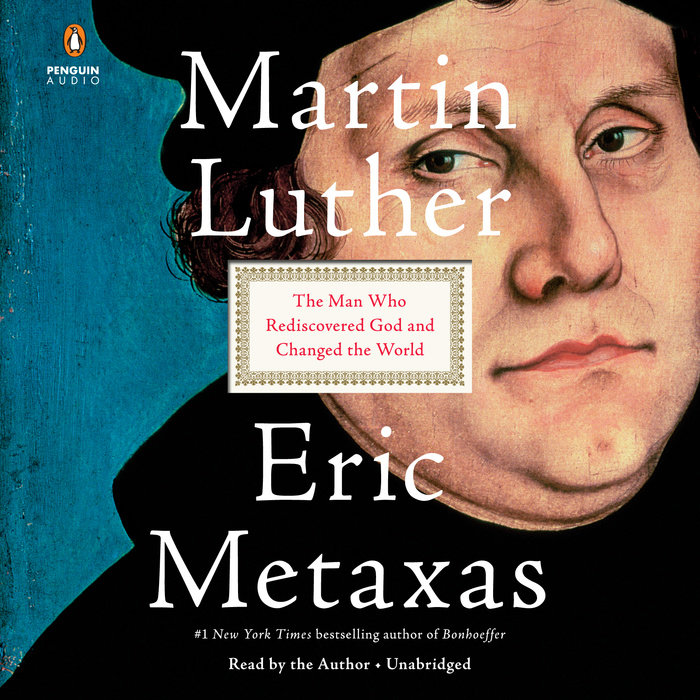
"Martin Luther" by Eric Metaxas -- Reformation: Why in Germany and why Martin Luther?

This is a biography of Martin Luther, a monk in 16th century Germanic state of Saxony whose ideas about Bible started a religious reformation of catholic church. 

This is a story about a private person and his ideas and how he evolved to think that way. 

The book is too big with some unnecessary repetitive information. It is fine to read it if book is available in a local library. It has lots of interesting stuff about Luther himself. Even picture we now recognize as Luther is very different from young Luther people saw when reformation started in 1517. But ultimately I think the author failed to truly explain a political and economical background that prompted  Luther to do what he did. 

The most important question is why reformation started in Germany. Why not in France or Italy or Spain?  Luther himself said it briefly in one of the notes in the book it is because the power the Pope had over Germanic states was more widespread and chance of abuse higher than it was in other parts of Europe. By 16th century Spain, France were already consolidated their statehood and interference in their internal affairs by the Pope was minimal. But Germany was different. It consisted of small principalities and the Pope were able to easily get involved in their internal affairs. Luther's religious reformation was in fact a political turning point in western Europe.

posted by David Usharauli  

Sunday, January 20, 2019

Dan Brown's 'Origin' reads like a flying air balloon that deflates before reaching stratosphere


This book truly disappoints. It is another book from Robert Langdon series. It starts great but the climax and revelations are so anticlimactic that you are left feeling as if time spent reading it was totally wasted. I had not expected such weak ending from "The Da Vinci Code" author.

The actual "villain" behind the plot is immediately recognized from the conversations that follows Kirsch's presentation and his tragic end.

Only reason to continue reading is to know what was it that actually Kirsch discovered. But when his discoveries are revealed you are left asking yourself "what? its all? Are you kidding me".     

 posted by David Usharauli


Thursday, November 30, 2017

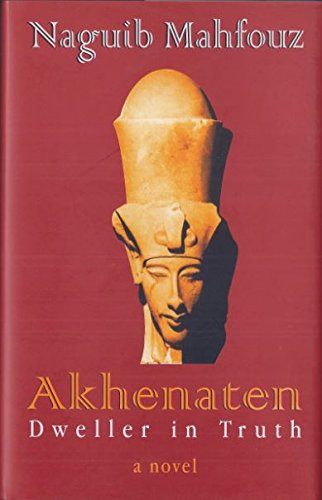
Akhenaten Dweller in Truth - review

This book is written by the famous Egyptian writer. It tells the story of Egyptian Pharaoh Akhenaten (known also as Amenhotep IV or Ikhnaton). 

Akhenaten is one of the most recognized of Pharaohs for two reasons: he was world's first known religious reformer who promoted cult of Aton, a first known monotheistic religious about  God who wants love and peace, and he was married to Nefertiti, a famed beauty queen of Egypt. 

The novel is written in a style similar found in "The Daughter of Time" or "An Instance of the Fingerpost" where story about Pharaoh is told from different people's perspective. These people were real historical figures, close associates of the Pharaoh.

In my opinion, this novel lacks that little something that supposed to make it more clear the history behind this enigmatic Pharaoh. I did not learn much about him from this novel beyond to what is generally known about his reign. It did not advance any narrative that could explain the Pharaoh's behavior and his decision to change the Egypt. But it was sufficiently interesting book to pique my curiosity so much so I decided to read other books about Akhenaten. 

posted by David Usharauli


Tuesday, January 26, 2016

"The Sparrow" - a sci-fi novel that disappoints


I have nothing much to say about this novel. It really disappointed me. It had a very interesting summary and I thought it might be something similar to "A Canticle for Leibowitz", a mix of sci-fi and religion.

Actually, I forced myself to read it but only around 80% and then I decided to give it up. If novel does not say anything important or relevant after reading more than half of it, I don't expect a miracle in the end.

However, it had such a interesting story. Jesuit priests and scientists travel to different planet to understand who are those aliens who transmit their "singing" through radio. Somehow this travel end up very badly. So the story supposed to be reconstruction of what went wrong and how people of faith lost it all.

But, the author decided to drag the story by discussing irrelevant stuff that has no role or influence how story develops. I read close to 80% of the novel and still I had no idea what was going. In fact, first 5 pages contained all the information available in next 350 pages. It felt that the author deliberately decided to make novel's "revelation" only in the very end of the book, but without considering how to make the reader interested enough to keep reading it. 

For me this novel felt like those novels that make you feel you have really wasted whatever time you spent on reading it. 

posted by David Usharauli