Republished with some changes.
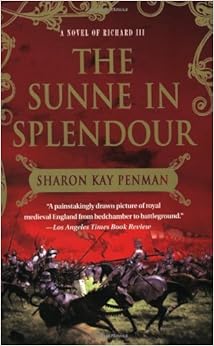
Richard III has become a cult figure in our time. If you don't yet know who was Richard III, then Sharon Kay Penman novel "The Sunne In Splenduor" is an excellent choice. First novel of hers I read was "Lionheart"
about crusades and Richard I of England. It was beautifully written
novel. So I decided to read another of her novels about Wars of Roses
set in late 15th century.
This novel "The Sunne In
Splenduor" is about two Kings of Yorkist dynasty, Edward
IV and Richard III. Actually three-fourth of the novel is mainly
about Edward IV, Richards eldest brother, the first Yorkist King.
House of York was one branch of Plantagenet dynasty that ruled
England since 12th century. Another branch was house of Lancaster
(Henry VI). Tudors were remotely related to Lancasters.

Wars of Roses lasted for about 25-30 years.
Young Edward IV managed to defeat his opponents and ruled England for
more than 20 years. He had a talent for war and women (two of most important qualities for a King in the medieval Europe). He was not even
20 years old when he first led his victorious army on the
battlefield. He apparently was unusually tall and according to book
very handsome, though images of Edward IV I have seen do shows very different face. His life trajectory reminds me of Richard Lionheart
and his own grandson Henry VIII. Like Lionheart, Edward was tall and
skilled military leader and like Henry, Edward was indulging himself
too much and as a result he died barely reaching age 40.
Richard, his younger brother was named as Lord protector by Edward before his
death. Edward's own son, young boy named Edward, was to succeed him
on the throne once he reached age of maturity. However, for reasons not fully
understood, Richard was proclaimed as a King Richard III and prince
Edward and his younger brother Richard vanished from the palace
(white Tower).
According to this novel, princes were murdered
by Duke of Buckingham on his own initiative. Novel suggests that
Duke of Buckingham had his own aspiration to become King
himself. He later rebelled against Richard III and was
executed.
Richard III is shown as a gentle person who
loved his nephews. Novel explains that Richard was forced to take the
crown because his nephews were "illegitimate" due to fact
that before Edward IV married their mother Queen Elizabeth Grey, he
was legally bound to another woman, Eleanor Butler. No one can really
say whether it was a real fact or some fabrication to advance
Richard's claim to the throne. This type of "illegitimacy" claims were quite common even against King Edward IV and also young prince
Edward, son of Henry VI, house of Lancaster. Later in the book,
Richard III himself is shown having doubts about his right to the
throne, especially after losing his heir, Edward and then his wife,
Queen Anne, in quick succession.
One thing is clear:
during the battle of Bosworth field in August 1485, Richard III's superior force (20,000 man at arms) was defeated by small army of Henry Tudor (5,000 man at arms) and he himself killed. Many critical
information from that time are missing to fully understand why would Richard III gamble his life in the battle field by engaging personally what looked like a suicidal action.
posted
by David Usharauli