Showing posts with label FDA. Show all posts

Sunday, September 6, 2015

What FDA does and how FDA does it?

Federal Drug Administration (FDA) is a federal agency that controls drug and biologics approval process. FDA decisions make or sometime breaks the companies.   
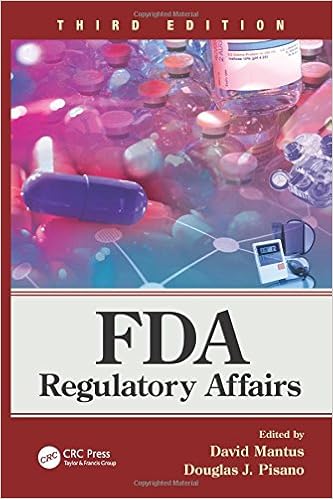
This book, edited by Douglas Pisano and David Mantus, is a compilation of FDA related regulations and law applicable to biotech/biopharma drug development.

Of course no single book can provide full picture of FDA. Though I would say this book does some decent job, especially one chapter with tips how to find FDA related information online. Chapter about IND is also quite good. 

Primary interest in this book from scientist's point of view are chapters about IND and NDA applications. I personally learned that new law enacted in 2012 increased by 60 days both standard and priority review times necessary for NDA processing (8 months for priority review and 12 months for standard review).

Also, I learned that until FDA approves new drug, drug manufacturer or its associates cannot mention anywhere that their drug is "safe" or "effective". I did not realize that such rule existed. In my work, I frequently encounter science articles where IND/NDA-associated drug is discussed. I have not paid attention before but now it will interested to verify how drug-sponsors adhere to this FDA regulation.

posted by David Usharauli

Monday, August 17, 2015

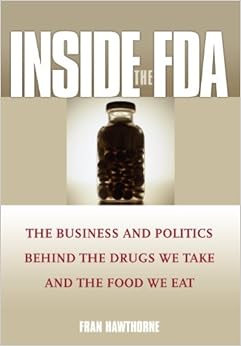
"Inside the FDA" by Fran Hawthorne - Review

Republished with some modification.

I have decided to read this book to become more familiar with the FDA's role and its impact on BioPharma. And also because the author, Fran Hawthorne's writing style is quite easy to follow and isn't boring.

Of course, similar to her earlier book about pharma company Merck, Fran Hawthorne's writing failings are in its content. This book, rather than being "inside the FDA" is more better described as "about the FDA".

The author provided short overview how FDA was established and how it is accomplishing its duty to keep the public safe from poor quality drugs or food. However, it is based on publicly available information that does not really explain how is works.

In addition, since the book was published in 2004, it is probably outdated. The book simply reinforces long-held public opinion that politics does play a role in how FDA, as a federal agency, does it's work. Rather being totally "objective", it appears that FDA's visions undergo modification whenever new directors are appointed.

Another topic discussed in this book is the FDA's approval process. The book tend to imply that FDA reviewers are near "perfect" scientists whose opinions should be followed strictly no matter what. This is, of course, the most unrealistic scenario. 

posted by David Usharauli  

Sunday, August 2, 2015

Vertex in Vortex: from Great to Ordinary

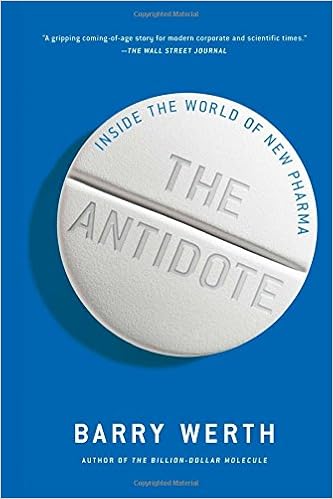
The first book I reviewed was Barry Werth's "The Antidote: Inside the World of New Pharma". I am re-publishing this review with slight modification. This book is about Vertex Pharmaceuticals, a biotech company founded in late 1980's with the noble idea to put the patients first, not Wall Street, when developing new medicine. 

Unfortunately, by the time it developed first in-house revolutionary drug against HepC (that was approved by FDA in 2011), it became a conventional big Pharma with the focus on quarterly earning and with little regard to patient's needs.

This transformation from good to ugly was especially apparent in how the corporate management discarded the people involved in initial stage of the company's development. This story reinforces well established concept that right ideas do not survive wrong people.   

Book's title is unusual. It has no relationship to the book's content. Book is easily readable but it is unnecessarily too long with many chapters jumping from one topic to another.

The author's written style is quite good and book is easy to read and  but it does not really tell any unique story worth making it into in your private library collection. 

So, if you have a chance to read it from you local library, go ahead and read it, but I would not recommend buying it. 

posted by David Usharauli


copyright © 2015 by David Usharauli